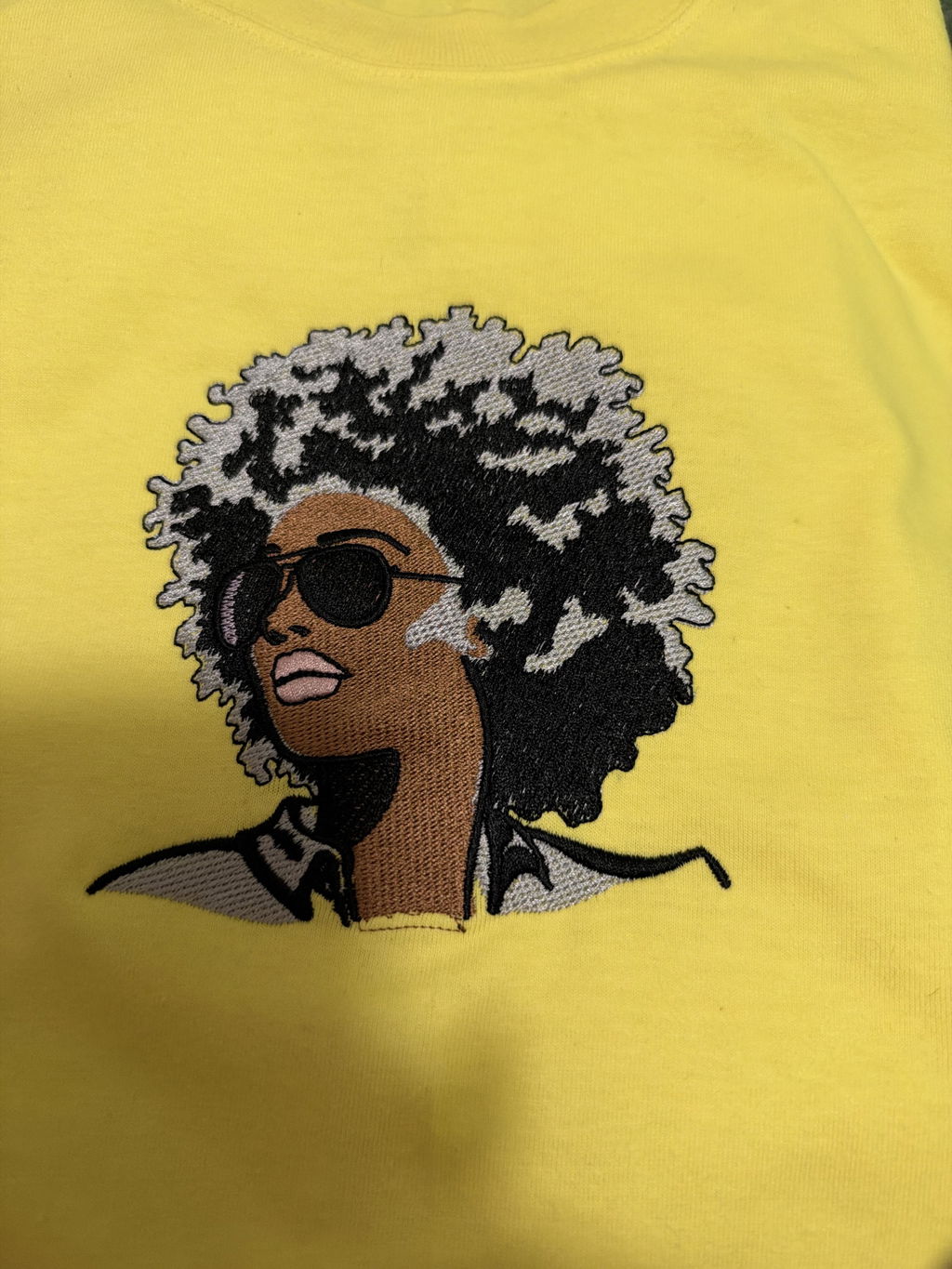
1. Introduction to Resizing in Hatch Embroidery
Perfectly sized embroidery is the difference between a design that merely fits and one that truly looks intentional. Whether you are shrinking a favorite motif for a baby garment or enlarging artwork for a jacket back, Hatch makes resizing approachable with intuitive tools, automatic stitch recalculation, and quality safeguards. For secure hooping across projects, magnetic embroidery frames can help reduce slippage as you scale.
In this guide you will learn step-by-step resizing methods, how to preserve stitch quality, ways to troubleshoot common issues, time-saving workflows, and advanced object-level techniques—so you can resize confidently on any project.
Table of Contents
- 1. Introduction to Resizing in Hatch Embroidery
- 2. Step-by-Step Resizing Methods in Hatch
- 3. Preserving Stitch Quality During Resizing
- 4. Troubleshooting Common Resizing Issues
- 5. Efficiency Techniques: Shortcuts and Batch Workflows
- 6. Advanced Stitch and Object Handling
- 7. Advanced Resizing Strategies
- 8. Conclusion: Key Takeaways for Perfect Resizing
- 9. FAQ: Resolving Common Hatch Resizing Questions
2. Step-by-Step Resizing Methods in Hatch
Resizing in software machine embroidery blends precision with control. Below are practical ways to prepare, scale, and verify your work so it stitches out as expected.
2.1 Preparation and Design Selection Fundamentals
Import a supported file (such as .dst, .pes, or .exp), then arrange elements in the workspace if you are working with multiple designs. Use the selection tool to highlight the whole design, or ungroup to control individual parts. Common tutorial wisdom: press Ctrl+A to select everything—you will see handles indicating the active selection. Confirm dimensions in the context toolbar or status bar to establish a clean baseline before scaling.
Organize your library and keep editable, high-quality source files. This upfront prep reduces rework, especially when resizing complex, multi-object designs.
2.2 Four Core Scaling Techniques Explained
- Quick Resizing via Toolbar Icons (±10%)
Use the +10% and -10% buttons for small, incremental adjustments. Each click changes size relative to the current state—ideal for precise nudging.
- Manual Dimension Input with Proportional Lock
Enter exact width and height in the toolbar. Turn on the lock to keep aspect ratio intact, then confirm to apply precise scaling without distortion.
- Preset Hoop Sizes
Select a standard hoop size (e.g., 4x4 or 5x7 inches) and let Hatch scale the design to fit. This speeds up workflow and respects machine limits.
- Batch Processing for Multiple Designs
Use batch tools to apply consistent target dimensions across many files at once—perfect for production runs or recurring orders.
Best Practices:
- Hold Shift while dragging corners for proportional scaling.
- Preview with Stitch Player before exporting to spot surprises early.
- Save custom settings, including auto-recalculation, to streamline your process.
- Avoid huge jumps; incremental changes often keep quality higher.
2.3 Advanced Tools: Multi-Hooping and Auto-Recalc
When a design exceeds a single hoop, use Multi-Hooping to split it into sections and place them across available hoops. Plan each magnetic hoop segment, and print worksheets with color sequences and alignment marks to stay organized.
Enable automatic stitch recalculation during resizing to maintain density and stitch types. Use Stitch Player to visually confirm the sequence and density before export.
| Tool/Feature | Function | Location |
|---|---|---|
| Stitch Player | Preview stitch sequence and color changes | Toolbar/menu options |
| Hatch Library | Organize/tag designs for quick retrieval | Left-hand panel |
| Proportional Scaling | Maintain aspect ratio during manual resizing | Lock icon (dimensions) |
| EmbroideryConnect | Wireless transfer to embroidery machines | File > Send to Machine |
3. Preserving Stitch Quality During Resizing
Resizing is about more than dimensions; it is about keeping every stitch clean, consistent, and properly spaced.
3.1 Managing Stitch Density and Distortion Risks
For optimal results, keep designs within 400mm (16") in width or height; larger pieces can cause errors. For very large images, consider external prep (for example, resampling in a graphics tool) before importing to Hatch.
Use Graphics Mode to preprocess bitmaps—resize, crop, adjust brightness/contrast, and reduce color depth. After scaling, confirm visibility in Embroidery Mode and refine with Adjust Bitmap.
Control density globally (select all and apply percentage-based changes) or locally (targeted regions). Auto Fabric can tune density and underlay for your material, and custom profiles help with unique fabrics.
Technical tips:
- For curved fills, increase stitch spacing by about 20% to avoid center bunching.
- Edge Run underlay stabilizes small shapes and reduces core density.
- Choose suitable needles like SUK or H/E for complex fills.
Always preview with Stitch Player and test on scrap fabric to validate the results.
| Density Method | Adjustment | Purpose |
|---|---|---|
| Manual Global | 200% stitch space | Reduce overall stitch count |
| Auto Fabric | Fabric-dependent | Optimize for material properties |
| Curved Fill | +20% spacing | Prevent center bunching |
3.2 Fabric Considerations and Tension Solutions
Even the best-resized design can fail if the fabric shifts. Pair the right stabilizer with a magnetic embroidery hoop to keep material steady—cutaway for knits, tearaway for wovens, and water-soluble for delicate or textured surfaces.
For garments, hooping systems are critical. Sewtalent magnetic hoop systems provide even tension and reduce slippage and distortion on scaled designs. The textured surface and wide contact area help maintain placement while the magnetic force accommodates varying thicknesses without manual adjustment. This protects fabric from hoop burns and helps your resized stitches land exactly where you intended.
4. Troubleshooting Common Resizing Issues
When scaling goes wrong, you may encounter missing stitches, corrupted files, or degraded effects. Here is how to diagnose and fix the most common problems.
4.1 Solving Lost Stitches and File Corruption
Stitches often disappear after excessive resizing (especially beyond 10–20%), repeated format conversions, or when opening in a mode the original does not support.
How to fix it:
- Automatic Stitch Recalculation: Keep recalculation on while scaling, and avoid exceeding recommended limits (for example, the 400mm maximum for certain workflows).
- Aspect Ratio Lock: Turn on the lock before resizing to prevent distortion that can cause stitch loss.
- File Handling Best Practices:
- Save to a new file rather than overwriting the original.
- Import as stitches-only to salvage damaged outlines (with limited editability).
- Preprocess bitmap-heavy designs externally before bringing them into Hatch.
Always preview in Stitch Player to catch problems early. If a file becomes corrupted, revert to the original and resize in smaller steps. For persistent issues, submit a system report to support.
4.2 Fixing Special Effects Degradation
Gradients, curved fills, and layered textures are sensitive to scale changes.
What helps:
- Graphics Mode tweaks (color depth, brightness, contrast) before resizing.
- Preset sizes for recurring design types to maintain effects.
- Manual stitch edits (angles, densities) for intricate areas.
- Limit iterations; start from the original for big jumps.
Quick checklist:
- Lock aspect ratio first.
- Preview in TrueView and Stitch Player.
- Save separate versions with clear names.
By following these steps, you can keep garment projects crisp and production-ready.
5. Efficiency Techniques: Shortcuts and Batch Workflows
Save clicks and reduce turnaround with smart shortcuts and batch actions built into Hatch.
5.1 Keyboard Shortcuts and Preset Libraries
Essential Shortcuts:
- Shift + 0: Zoom to selected objects instantly.
- Ctrl + S: Save often to protect progress.
- Alt + [Menu Letters]: Navigate menus quickly (e.g., Alt + F + O).
- H: Enter reshape mode.
- Spacebar: Toggle stitch types during digitizing.
Zoom and Navigation:
- Press 1 to fit the design as large as possible on screen.
- 0 zooms to a specific area.
- B activates box zoom.
- P pans.
- T toggles TrueView.
Preset Libraries and Workflow:
- Use +10% and -10% icons for incremental size changes.
- Save and reuse preset sizes for common magnetic embroidery hoops or project types.
- Organize your workspace around frequently used tools.
- Combine designs to merge resized elements into a single file.
- Preview with Stitch Player before export.
Pro tip: Integrating shortcuts and presets can significantly reduce resizing time, leaving more room for creative decisions.
5.2 Streamlining Production with Batch Tools
Batch Resizing:
- Select multiple designs in Hatch Library or via the file menu.
- Set your target dimensions or preset size.
- Apply to all selected files with a single command.
Production Power-Up:
- Pair batch resizing with a Sewtalent magnetic embroidery hoop and a M**ght Hoop station for garment work.
- The magnetic system enables quick, consistent hooping—ideal for high-volume orders and tight deadlines.
Why it matters:
- Less time hooping and resizing means more completed pieces.
- Batch consistency remains high across runs.
Action step: Batch-resize your next set of designs and align hooping and export steps in one streamlined workflow.
6. Advanced Stitch and Object Handling
Once you master the basics, Hatch’s object and stitch tools let you refine scaled designs with precision so your results match your vision.
6.1 Grouping Strategies for Complex Designs
Grouping keeps multi-object layouts aligned when resizing, rotating, or mirroring as a unit. Use Shift or Ctrl to multi-select, then group. Ungroup for fine-grained control when you need to adjust stitch type, density, or angle on individual elements. Manipulate handles on screen, confirm dimensions in the toolbar, and preview in TrueView. Pro tip: lock designs before major changes and reshape outlines after scaling for clean curves.
6.2 Stitch-Type Optimization: Satin vs Fill
Choose stitches based on scale and coverage needs.
| Factor | Satin Stitch | Fill Stitch |
|---|---|---|
| Ideal Use Case | Borders, outlines, small details (<10–12mm) | Large areas, backgrounds, textured fills |
| Appearance | Smooth, glossy finish | Textured, woven look |
| Durability | Can snag if too wide | Stable and wear-resistant |
| Thread Usage | Efficient on small features | Higher thread consumption |
| Fabric Compatibility | Best on stable fabrics | Works on stretch fabrics with stabilizer |
Key adjustments:
- Downscaling: Convert narrow satin to fill to prevent loose coverage; shorten stitch length and refine angles.
- Upscaling: Expand fill coverage and adjust density to avoid sparse areas.
Advanced moves: Layer satin outlines over filled backgrounds for depth, use carving tools to shape fills, and test specialty thread settings at the targeted scale.
Always verify in Stitch Player and test-stitch small sections before final production.
7. Advanced Resizing Strategies
Professional results depend on proportion, alignment, and density across every object—especially in layered or mixed-stitch compositions.
7.1 Multi-Object Alignment Techniques
Proportional Scaling
- Proportional Lock: Enable the lock before resizing to prevent width/height distortion.
- Manual Dimensions: Enter exact size values and confirm using both the context toolbar and status bar.
- Incremental Steps: Use ±10% for fine-tuning.
- Visual Resizing: Drag corner or side handles; use Shift to resize from the center or Ctrl from a side.
Mixed Stitch Types
- Resize objects independently when needed; satin can struggle at very small widths, while fills may need density adjustments when enlarged.
- Group related elements to maintain internal alignment; ungroup for object-level refinements.
- After edits, Ctrl+A to check overall size.
Multi-Hooping for Oversized Designs
- Automatic Hoop Addition: Let Hatch split the design across hoopings that exceed your frame.
- Manual Hoop Placement: Adjust positions to streamline the stitch sequence; this is ideal for multi-needle workflows and is smoother with magnetic hoops for embroidery machines.
- Registration Marks: Add alignment marks so each hooping lines up perfectly.
Quality Assurance
- Stitch Player: Simulate the stitch-out to confirm alignment and density.
- Fabric Tests: Run tests on your actual fabric.
- Versioning: Save resized variants under new names for rollback safety.
| Method | Use Case | Advantages | Limitations |
|---|---|---|---|
| Proportional Lock | Uniform scaling | Prevents distortion | Only for proportional changes |
| Manual Dimensions | Exact size requirements | High accuracy | Requires precise measurements |
| Incremental Scaling | Small, quick adjustments | Simple and fast | Cumulative error if overused |
| Visual Resizing | On-screen alignment | Intuitive and flexible | Less precise for complex designs |
Key takeaways: lock proportions, group strategically, use Multi-Hooping for large layouts, preview early, and save versions.
7.2 Density Optimization Beyond 10% Scaling
When scaling beyond 10%, density and detail management become critical.
Auto-Digitizing Adjustments
- Automatic Stitch Recalculation: Keeps density, angle, and stitch types appropriate at new sizes—especially for small text or intricate motifs.
- Stitch Count Monitoring: Watch real-time counts; sudden spikes or drops signal the need for manual tweaks.
- Fine-Tuning: Adjust density and angles to prevent sparse coverage when enlarging or bulk when shrinking.
Multi-Hooping for Large-Scale Designs
- Split oversized designs into sections and recalculate per segment to preserve quality.
| Factor | Hatch Solution | Impact |
|---|---|---|
| Stitch Density | Optimization adjusts spacing and direction | Reduces waste and preserves detail |
| Intricate Detail | Auto-digitizing with customizable types | Sharp edges and clean lines |
| Hoop Limits | Multi-hooping per segment | Large designs without distortion |
Real-World Workflow
- Import and prepare high-quality artwork; apply auto-digitizing with adjustable parameters.
- Resize via toolbar or manual input while monitoring stitch count; enable multi-hooping if needed.
- Fine-tune density and angles; use design checkers to flag risks.
| Challenge | Solution |
|---|---|
| Density Loss | Increase density or reduce spacing |
| Distortion in Details | Use multi-hooping for intricate areas |
| Material Waste | Use optimization tools for efficiency |
By combining auto-digitizing, multi-hooping, and live monitoring, you can scale well beyond 10% without sacrificing stitch quality or detail.
8. Conclusion: Key Takeaways for Perfect Resizing
Resizing in Hatch balances proportion, density, and detail. Rely on proportional scaling, use automatic stitch recalculation, and preview with Stitch Player. Always test on fabric and save versioned files. With these practices, resizing becomes a dependable, creative tool rather than a risk.
9. FAQ: Resolving Common Hatch Resizing Questions
9.1 Q: What’s the maximum percentage I can safely resize a design in Hatch?
A: Stay within 10–20% for best results, especially for stitch files. Larger changes can require manual density edits or multi-hooping.
9.2 Q: How do I fix distorted stitches after resizing?
A: Turn on automatic stitch recalculation. If needed, manually edit stitch angles and densities in Object Properties, then verify in Stitch Player.
9.3 Q: How can I maintain the original aspect ratio when resizing?
A: Enable the proportional lock before scaling. Width and height will change together, preventing distortion and preserving proportions.