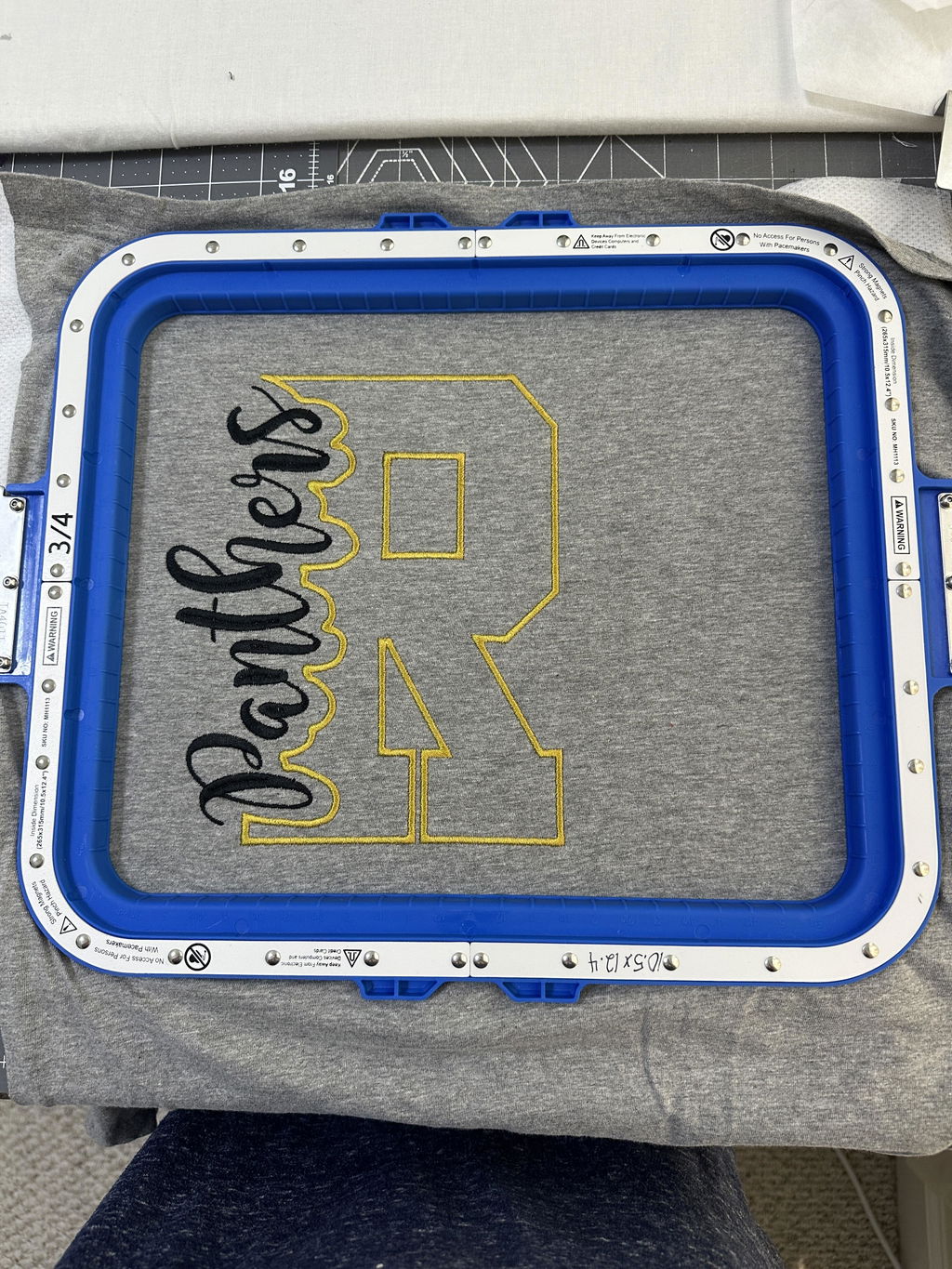
1. Introduction: Exploring Amann Group's Textile Legacy
For more than 170 years, Amann Group has shaped textiles—from early industrial silk to today’s high-performance, sustainable threads. As a global leader in industrial sewing threads and embroidery yarns, the company blends heritage with technical innovation. This guide traces Amann’s rise, explains the technical differences between Strongbond and Saba, and highlights circularity and resource efficiency. Along the way, we connect thread selection with modern hooping methods such as magnetic embroidery hoops to help you achieve reliable, professional results.
Table of Contents
- 1. Introduction: Exploring Amann Group's Textile Legacy
- 2. Amann Group: Heritage and Global Operations
- 3. Technical Specifications: Strongbond vs. Saba Threads
- 4. Sustainability Leadership: Circular Economy Models
- 5. Thread Selection Guide for Machine Embroidery
- 6. Comparative Analysis: Strongbond vs. Saba
- 7. Global Availability and Purchasing Channels
- 8. Conclusion: Integrating Amann Threads into Modern Embroidery
- 9. FAQ: Amann Threads Demystified
2. Amann Group: Heritage and Global Operations
2.1 Founding Milestones and Historical Evolution
Amann’s story begins in 1854, when Alois Amann and Imanuel Böhringer founded Amann & Böhringer in Bönnigheim, Germany, focusing on twined and colored silk. Initially powered by manual and animal labor, the company’s shift to steam-driven machinery signaled an early embrace of industrial progress. By 1880, acquisitions and a move into Northern Italy marked international growth. After Böhringer’s exit in 1882, the firm became Amann & Söhne, with Emil and Alfred Amann joining leadership—Emil’s work with synthetic fibers foreshadowed future technical breakthroughs.
Across the 20th century, Amann adopted mercerized cotton and synthetic fibers, expanded production sites across Europe and Asia, and in 1955 pioneered endless synthetic sewing threads. By 2002, specialty programs for technical textiles were underway. Recent milestones include the Amann Innovation Lab, expansion into Bangladesh and Vietnam, and a sustainability focus featuring recycled lines and Cradle to Cradle GOLD certified threads. The headquarters in Bönnigheim remains a symbol of enduring innovation.
2.2 Management Structure and Global Footprint
Amann’s leadership—featuring executives such as Wolfgang Findeis, Ivo Herzog, Peter Morgalla (COO), and Arved Westerkamp—drives strategy alongside global directors like Jochen Lagemann (Apparel and Specialties) and Peter Kabelitz (Procurement). Dedicated legal, HR, and technical advisory teams add depth.
As leaders in industrial embroidery, Amann operates production in Europe and Asia, serving markets efficiently with roughly 2,500 employees across 21 countries. Products reach 100+ countries via direct and partner channels, delivering nearly one million kilometers of thread daily. Latest reported revenue is €230 million, reflecting German market leadership and a top-three global position. A broad portfolio supports universal sewing, high-tech yarns, and specialized solutions—backed by training and customer support that many practitioners complement with tools like magnetic hoops for embroidery machines.
3. Technical Specifications: Strongbond vs. Saba Threads
3.1 Strongbond Nylon: Heavy-Duty Performance Metrics
Strongbond is engineered for high-stress, high-speed industrial sewing. Built from Polyamide 6.6 (Nylon) continuous filament and bonded with resin, it offers superior abrasion, heat, and fray resistance. For robust materials like leather and canvas, frame stability helps—many shops reinforce setup with magnetic embroidery frames.
| Category | Tex Number | Needle Size (Nm/No.) | Applications |
|---|---|---|---|
| Lightweight | 35 | 80–100 (12–16) | Shoes, bags, outdoor garments |
| Medium-Weight | 70 | 110–120 (18–21) | Furniture upholstery, heavy curtains |
| Heavy-Weight | 135 | 140–150 (22–23) | Large leather goods, heavy-duty outdoor gear |
| Extra Heavy | 210 | 180–200 (24–25) | Contrast stitching, bold topstitching |
| Extreme Duty | 270 | 200–230 (25–27) | Applications demanding maximum durability |
The bonded finish boosts strength and reduces breakage during multidirectional, high-speed runs—ideal where reliability is non-negotiable.
3.2 Saba Polyester: Versatility in Embroidery Applications
Saba delivers a soft, versatile polyester continuous filament option, available as core-spun or texturized (Sabasoft). It balances strength with gentle handfeel, making it a favorite for apparel and delicate embroidery. Saba carries Oeko-Tex Standard 100 certification.
| Product Line | Tex Number | Needle Size (Nm/No.) | Applications |
|---|---|---|---|
| Saba Tex 40 | 40 | Not specified | Bag making, general-purpose sewing |
| Saba Tex 80 | 80 | Not specified | Light to medium-duty applications |
| Sabasoft | 18 | 70 (10) | Lingerie, sportswear, activewear |
Needle Size Guidelines:
- Strongbond requires larger needles due to bonded construction (for example, Tex 35: Nm 80–100 / No. 12–16).
- Saba pairs with smaller needles for flexible or delicate fabrics.
Application Recommendations:
- Strongbond: Multidirectional, high-speed sewing on tough substrates like leather and canvas.
- Saba: Bag making, lingerie, and sportswear, where softness and flexibility matter most.
4. Sustainability Leadership: Circular Economy Models
The industry is moving from "make-use-dispose" to regenerative circularity. Amann embeds these principles in product design and operations, setting high bars for material health and resource stewardship.
4.1 Cradle-to-Cradle Certified Product Lines
Amann’s Lifecycle threads follow two perpetual loops:
- Biological cycle: Lifecycle Cotton is fully compostable.
- Technical cycle: Lifecycle Polyamide is designed for repeated recycling.
Lifecycle threads hold C2C Gold certification, covering material health, circularity, climate protection, water stewardship, and social fairness. The Recycled line uses 100% post-consumer waste (e.g., PET bottles) and is certified to the Global Recycled Standard (GRS). Amann is also pioneering smart yarns with sensors and conductive elements.
4.2 Water Conservation and Resource Efficiency
Amann invests in water-saving dyeing and advanced management:
- Reverse osmosis has cut dyehouse water use by 29% over five years.
- Between 50% and 80% of treated water is reused; the India facility targets zero liquid discharge.
These efforts are supported by ISO 14001, C2C Gold, and GRS. The company’s digitizing software integration, alignment with the UN Global Compact, and training for teams and suppliers reinforce sustainability commitments.
5. Thread Selection Guide for Machine Embroidery
Choosing the right thread becomes simple when you match fiber, Tex, and design—and stabilize fabric with the right hooping approach.
5.1 Matching Thread Types to Fabric and Design
- Lightweight fabrics (silk, lingerie): Choose lower Tex options like Saba Tex 24 or 30 for flexible, intricate work.
- Medium-weight fabrics (denim, workwear): Saba Tex 40 balances strength and flexibility for topstitching, closures, and accents.
- Heavy-duty applications (outdoor gear, leather): Strongbond Tex 70 and above deliver abrasion resistance and reduced breakage.
Material considerations:
- Polyester (Saba): Durable, colorfast, and skin-friendly for apparel and sportswear.
- Recycled polyester: GRS-certified recycled options support eco-conscious projects.
Finish and color:
- Brilliant shine: Isacord brings silky sheen.
- Matte finish: Saba offers understated elegance.
- Variegated effects: Isacord Multicolour creates gradients without thread changes.
Pro tip: Use real-thread charts or digital tools to confirm shade accuracy.
5.2 Optimizing Tension with Sewtalent Magnetic Hoops
If puckering, hoop burn, or uneven tension slow you down, the right magnetic hoop can transform results. Sewtalent magnetic hoops are a practical pairing for garment embroidery.
- Even fabric tension: PPSU engineering plastic and strong magnets adapt to varying thicknesses for smooth, distortion-free stitching—even on towels or multilayer denim.
- Time-saving efficiency: Traditional screw hoops can take up to 3 minutes per garment; Sewtalent can finish in 30 seconds—a 90% time savings.
- Reduced hoop burn: Evenly distributed force protects the finish.
- User-friendly alignment: Reference lines and textured surfaces simplify positioning for beginners and pros.
Sewtalent compatibility spans hundreds of embroidery machine brands and more than 17 sizes. For high throughput, pair hoops with an embroidery hooping station to streamline repeatable garment placement.
5.3 Troubleshooting Common Thread Challenges
Even with quality materials, issues can arise. Consistent setup and the right tools—such as well-fitted machine embroidery hoops—help prevent them.
- Thread breakage:
- Needle size: Match needle to Tex. For instance, Tex 24 pairs with size 9–10; Tex 40 works with size 12–14.
- Thread quality: Use abrasion-resistant options like Saba or Strongbond for demanding seams.
- Looping or puckering:
- Tension: Uneven tension is a common cause. Sewtalent magnetic hoops maintain steadier fabric tension.
- Bobbin thread: Choose fine, pucker-resistant options such as Bobbinette for delicate fabrics.
- Skipped stitches:
- Needle condition: Replace dull or damaged needles.
- Thread path: Verify correct threading and remove snags.
6. Comparative Analysis: Strongbond vs. Saba
When choosing between Strongbond and Saba, align thread behavior with project requirements rather than seeking a single "best" option.
| Feature | Strongbond | Saba |
|---|---|---|
| Material | Polyamide 6.6 (Nylon), bonded continuous filament | Polyester (PTT), continuous filament |
| Key Properties | Extreme fray/abrasion resistance, stiff finish | Soft, skin-friendly, abrasion-resistant, eco-friendly |
| Primary Uses | Heavy-duty seams (leather, canvas, outdoor gear) | Apparel (ladieswear, menswear, sportswear, denim) |
| Secondary Uses | Multidirectional sewing, contrast stitching | High-stress seams, automated sewing |
| Durability | Superior breakage resistance, ideal for tough jobs | High abrasion resistance for demanding seams |
| Sewing Behavior | Stiff, secure seams; smooth at high speeds | Soft, voluminous, comfort-focused |
| Eco-Friendliness | Not explicitly stated | Water-repellent (WRe), PFC-free, recycled variants |
| Needle Sizes | Tex 135: 22–23; Tex 210: 24–25; Tex 270: 25–27 | Tex 80: 10–12; Tex 100: 14–18 |
| Tex Range | 35, 45, 70, 90, 135, 210, 270 | 80, 100, 120, 250 |
| Color Options | Standard, variegated/rainbow | Multicolor, neon, water-repellent finishes |
| Special Features | Bonded coating for reduced friction | Stretch-friendly, PFC-free water-repellent finish |
Key takeaways:
- Strongbond: Choose for heavy-duty, high-stress builds like leather goods and outdoor gear.
- Saba: Ideal for apparel, sportswear, and denim, where comfort and eco features matter.
| Use Case | Strongbond | Saba |
|---|---|---|
| Leather goods | ✔️ (Primary) | ❌ |
| Denim seams | ❌ | ✔️ (Primary) |
| Outdoor gear | ✔️ | ❌ |
| Sportswear | ❌ | ✔️ |
| Decorative stitching | ✔️ (Variegated) | ❌ |
Ready to align your thread to the job? Use the strengths of each family to match durability, handfeel, and sustainability goals.
7. Global Availability and Purchasing Channels
Find Amann threads through authorized distributors and online retailers. In North America, vendors such as The Thread Exchange list bonded polyester options like Size 207 Tex 210 at $35.79 per 16 oz spool, with 10-spool cases priced at $322.11. In Canada, Rubenstein RB Digital carries embroidery lines like Isacord 40 KS (5000m) at $9.55 CAD and specialty yarns such as N-TECH heat-resistant.
Amann’s subsidiaries and production facilities in 19+ countries—including the USA, China, India, Vietnam, and multiple European locations—provide local sourcing, dependable stock, rapid delivery, and regional support. For bulk demand, tiered pricing and multi-spool cases help optimize cost. Offerings span embroidery threads, bobbin threads (e.g., ISABOB 150 CO from $21.00 CAD), and specialty yarns including conductive and sensor-enabled options. Quality and sustainability standards include OEKO-TEX®, GRS, and Cradle to Cradle Certified®.
To get started—or request a custom solution—contact local subsidiaries or reach the Innovation Lab at innovation-lab@amann.com.
8. Conclusion: Integrating Amann Threads into Modern Embroidery
Amann’s legacy combines craftsmanship with innovation. Strongbond and Saba deliver performance for rugged builds and comfort-focused apparel, while C2C Gold and GRS credentials reinforce responsible production. Paired with precise setup—often supported by a magnetic hoop for embroidery machine—you unlock consistent tension, crisp detail, and efficient workflows for professional-grade embroidery.
9. FAQ: Amann Threads Demystified
9.1 Q: What does the Tex number mean when selecting Amann threads?
A: Tex expresses weight in grams per 1,000 meters. Higher Tex equals thicker, stronger thread for heavy-duty builds; lower Tex suits delicate fabrics and fine embroidery.
9.2 Q: How do I match needle sizes to Amann thread types?
A: Match needle to Tex. For example, Strongbond Tex 35 pairs with size 80–100 (Nm 12–16), while Saba Tex 18 pairs with size 70 (Nm 10). Always follow product guidance.
9.3 Q: Are Amann threads certified for sustainability?
A: Yes. Options include OEKO-TEX® Standard 100, GRS, and Cradle to Cradle Gold, supporting safety, recycling, and circularity.
9.4 Q: Where can I buy Amann threads in bulk?
A: For embroidery machine repairs near me, contact authorized service centers. Threads are available via distributors like The Thread Exchange (USA) and Rubenstein RB Digital (Canada), and directly from Amann subsidiaries in 19+ countries. Bulk purchasing includes multi-spool cases.
9.5 Q: What types of specialty threads does Amann offer?
A: Beyond standard sewing and embroidery threads, Amann also produces heat-resistant, conductive, and sensor-enabled yarns for technical textiles.
9.6 Q: How does Amann support circular economy principles?
A: Lifecycle lines are C2C Gold certified for biological and technical cycles. The company also uses recycled inputs (such as PET bottles) and advances water conservation in production.
9.7 Q: How can I get technical support or custom thread solutions from Amann?
A: Contact the Amann Innovation Lab at innovation-lab@amann.com for selection guidance, application support, and sustainability options tailored to your needs.