1. Introduction: The Critical Role of Stabilizers in Machine Embroidery
Imagine building a house without a solid foundation—no matter how beautiful the design, it will fail. In machine embroidery, stabilizers are that foundation. They quietly support every stitch to prevent puckering, distortion, and the dreaded potato chip ripple. This guide unpacks fabric-specific choices, common mistakes to avoid, and specialty solutions for tricky projects, plus advanced and eco-minded options that go beyond basics.
Table of Contents
- 1. Introduction: The Critical Role of Stabilizers in Machine Embroidery
- 2. Stabilizer Fundamentals: Cutaway vs. Tearaway vs. Washaway Demystified
- 3. Fabric-Specific Stabilizer Selection: Conquer Puckering & Distortion
- 4. Hooping & Application Mastery: Avoiding Costly Mistakes
- 5. Specialty Stabilizer Techniques: Hats, Curves & Lightweights
- 6. Advanced Stabilizer Strategies: 3D, Multi-Layer & Dense Designs
- 7. Top Stabilizer Brands Reviewed: Performance & Value Compared
- 8. Sustainable Stabilizer Solutions: Eco-Friendly Performance
- 9. Troubleshooting Stabilizer Issues: Sensitive Fabrics Solved
- 10. Conclusion: Elevating Your Embroidery with the Right Foundation
- 11. FAQ: Your Stabilizer Solutions Questions Answered
2. Stabilizer Fundamentals: Cutaway vs. Tearaway vs. Washaway Demystified
Choosing stabilizer is not guesswork. It hinges on fabric structure, design density, and how long the piece must last.
2.1 Core Types Defined: Removal Methods & Structural Roles
Cutaway Stabilizer Cutaway is the backbone for stretchy or unstable fabrics. It stays in the garment, supports high-density stitching, and remains comfortable with soft subtypes like PolyMesh and Fusible PolyMesh. Its tight fiber matrix resists perforation and pairs well with magnetic embroidery hoops for consistent support.
Tearaway Stabilizer Tearaway provides temporary support and removes cleanly after stitching. It suits stable wovens such as denim, canvas, and bags. Firm and soft variants exist, including iron-on options for accurate placement.
Washaway Stabilizer Washaway dissolves in water, ideal for sheers (organza, tulle, chiffon) and freestanding lace, preserving drape with no residue.
| Feature | Cutaway | Tearaway | Washaway |
|---|---|---|---|
| Durability | High (permanent support) | Low (temporary use) | None (dissolves after washing) |
| Fabric Compatibility | Stretchy/knit fabrics | Structured/woven fabrics | Sheers, lace, 3D embroidery |
| Removal Method | Cut excess away | Tear away | Rinse away with water |
| Stitch Density | High-density designs | Low-density designs | Varies (usually lighter designs) |
| Skin Contact | Soft options (PolyMesh) | Not recommended for direct skin | No residue, ideal for baby items |
Usage Scenarios: - Cutaway: A logo on a cotton t-shirt stays crisp through washing. - Tearaway: A name on a denim jacket removes cleanly post-stitch. - Washaway: Freestanding lace or organza finishes without visible backing.
The key: Match stabilizer to fabric behavior and design demands.
2.2 Choosing Your Champion: Matching Stabilizer to Fabric & Design Needs
- Fabric Stretch:
- Knits, jerseys, fleece: Use cutaway. PolyMesh or Fusible PolyMesh minimizes show-through and movement on lightweight or light-colored garments.
- Wovens (cotton, linen, denim): Tearaway for low-density designs; heavy cutaway for dense fills or appliqué on lighter wovens.
- Design Density:
- High-density: Choose cutaway or layered supports.
- Low-density: Tearaway suffices on stable fabrics.
- Project Longevity:
- Apparel: Cutaway ensures wash-and-wear durability.
- Décor or accessories: Tearaway or washaway based on fabric and design.
Specialty Subtypes: - PolyMesh: No-show, soft against skin. - Fusible PolyMesh: Bonds to slippery knits for easier hooping. - Adhesive Options (StabilStick, HydroStick): For hard-to-hoop or multi-hoop setups.
Pro Tip: Skip blanket rules. If the fabric has give, it needs permanent support.
3. Fabric-Specific Stabilizer Selection: Conquer Puckering & Distortion
The shortest route to flawless embroidery is aligning stabilizer with fabric behavior.
3.1 Stretch Fabrics (Knits, Jersey, Fleece): Securing the Unstable
- PolyMesh/Fusible PolyMesh: Prevent shadowing on light garments and feel soft for skin contact. Fusible variants help tame movement during stitching.
- Layered Approaches for Fleece: Pair a cutaway base with a water-soluble topping to prevent stitches from sinking into pile; double up with heavier cutaway for very dense designs.
- Preventing Distortion: Secure the stabilizer before hooping and test combinations on scraps.
A simple upgrade—like positioning with magnetic embroidery frames—can help maintain even support on stretch.
3.2 Wovens, Textures & Sheers: Precision for Delicate & Dense Surfaces
- Stable Cotton/Linen: Medium tearaway for open, low-density motifs; cutaway for heavier embroidery on lightweight wovens.
- Denim & Dense Designs: Heavy cutaway to lock outlines in place.
- Organza, Tulle, Sheers: Washaway preserves drape and transparency; add a water-soluble topping if needed.
- Terry, Velvet, Textures: Base stabilizer (tearaway or washaway) plus a water-soluble topping to keep stitches on top.
| Fabric Type | Recommended Stabilizer | Notes |
|---|---|---|
| Stretch knits/jersey | Cutaway (PolyMesh/Fusible PolyMesh) | Prevents distortion, soft for skin-contact garments. Secure fabric and stabilizer tautly in the hoop. |
| Sweatshirt fleece | Cutaway + topping | Layer for dense designs; topping for pile |
| Stable cotton/linen | Tearaway | Medium weight for open designs |
| Denim (heavy design) | Heavy cutaway | Required for dense, multi-layer stitching |
| Organza/tulle | Washaway | Leaves no residue; preserves sheerness |
| Terry/velvet | Tearaway or washaway + topping | Topping prevents stitches from sinking |
4. Hooping & Application Mastery: Avoiding Costly Mistakes
Good stabilizer cannot compensate for poor hooping. Nail your technique to prevent puckering, distortion, and hoop burn.
4.1 Traditional vs. Floating Methods: Choosing Your Technique
Traditional Hooping Layer stabilizer under fabric and hoop both to achieve drum-like tautness without stretching the textile. Pros: maximum stability and minimal shifting. Cons: possible hoop burn on delicate or textured fabrics.
Floating Method For sensitive surfaces (velvet, terry, small pre-made items), hoop only the stabilizer, then adhere the fabric on top using temporary adhesive or sticky-backed options. Smart tools for hooping for embroidery machine make this easier on tricky items.
| Method | Pros | Cons |
|---|---|---|
| Traditional | Stable hold on most fabrics | Risk of hoop burn or distortion on delicate/stretchy materials |
| Floating | Prevents hoop burn; suits sleeves, small garments | Requires careful adhesive use; may need basting |
Expert Tips: - Use the smallest hoop that fits the design. - Add a second stabilizer layer under the hoop for thick or delicate textiles. - Balance hoop tension; always test on scrap first.
4.2 Tension Control & Adhesive Best Practices
- Taut, Not Stretched: Firm in the hoop without warping.
- Adhesive Placement: Spray stabilizer, not fabric.
- Basting: Hand or machine baste to reduce slippage on slippery or high-nap materials.
- Scrap Testing: Proactively verify your combo before the final piece.
If tension is inconsistent, a magnetic embroidery hoop can help maintain uniform pressure across the sewing field.
Sewtalent Magnetic Hoops: The Game-Changer for Garment Embroidery Magnetic clamping systems distribute pressure evenly and adapt to fabric thickness, reducing manual errors, puckering, and hoop burn. Upgrading to magnetic hoops for embroidery machines can streamline setup and protect delicate textiles while saving your hands from strain.
Common Mistakes & Fixes:
| Mistake | Solution |
|---|---|
| Improper hooping | Use the smallest hoop; avoid stretching fabric |
| Incorrect stabilizer | Match type to fabric weight and design density |
| Inadequate tension | Adjust hoop tension to prevent flagging |
| Adhesive overuse | Spray only the stabilizer, not the fabric |
5. Specialty Stabilizer Techniques: Hats, Curves & Lightweights
Curved and structured items need targeted tactics and specialty stabilizers.
5.1 Fusible & Adhesive Heroes: HydroStick, StabilStick & Beyond
Fusible PolyMesh CutAway - Great for lightweight knits, baby garments, and delicates. - Minimizes shadowing and remains soft after washing. - How to apply: Fuse from the wrong side with a pressing cloth; trim excess post-stitching.
StabilStick CutAway - Adhesive-backed stability for stretchy or curved areas. - Hoop stabilizer, peel release paper, press fabric onto the sticky surface.
HydroStick TearAway - Water-activated adhesive that excels on hats, collars, and hard-to-hoop spots. - Mist to activate, position, dry, and re-moisten for release.
Water-Soluble Films - Essential toppers for terry, fleece, and textured fabrics to keep stitches visible.
| Stabilizer Type | Best Use | Key Features |
|---|---|---|
| Fusible PolyMesh | Lightweight knits, delicates | Prevents shadowing; soft finish |
| StabilStick | Curved/small items, sleeves, hats | Adhesive backing; secure placement |
| HydroStick | Hats, collars, structured items | Water-activated; strong hold |
| Water-Soluble Film | Terry, fleece, textured fabrics | Keeps stitches on top; easy removal |
Pro Application Steps: 1. Cut stabilizer slightly larger than the design. 2. For fusibles, use correct heat and a pressing cloth. 3. For adhesives, apply to clean, dry fabric. 4. For film toppers, place on top and remove after stitching.
Insider Wisdom: - Use fresh adhesive stabilizers; age and humidity can degrade performance. - Pause to clean sticky buildup from needles; consider nonstick needles if needed.
5.2 Conquering Curved Surfaces & Structured Items
Hats & Caps - Use adhesive stabilizers (HydroStick or StabilStick) for secure positioning. - Keep sweatbands out of the way; gently flatten brims during setup. - For unstructured hats, press flat and rely on water-activated adhesives until stitching is done.
Bags, Sleeves, and Other Curves - Choose adhesive-backed or fusible stabilizers for precise control.
Sewtalent Magnetic Hoops: The Secret to Curved Garment Mastery Even, robust magnetic hold simplifies placement on sleeves and yokes and helps prevent distortion. A reliable magnetic hoop can save time and reduce errors on curved garment sections.
6. Advanced Stabilizer Strategies: 3D, Multi-Layer & Dense Designs
Push dimension and complexity with the right stabilizer architecture.
6.1 Building Dimension: Stabilizers for 3D Foam & Puff Embroidery
Stabilizer Selection - Heavyweight Cut-Away: Core support for thick foam, dense stitching, and heavy fabrics; stands up to washing. - Fusible Stabilizer: As a top layer, anchors foam and adds alignment. - Tear-Away: Only for lightweight, temporary projects; avoid for dense stitching.
| Stabilizer Type | Use Case | Key Considerations |
|---|---|---|
| Heavyweight Cut-Away | Thick foam, dense stitching | Permanent support; prevents puckering |
| Fusible Stabilizer | Securing foam, stretchy fabrics | Anchors foam; dual support |
| Tear-Away | Lightweight, temporary projects | Easy removal; not for dense designs |
Advanced Techniques - Dual-Layer: Heavy cut-away beneath, fusible on top to lock foam. - Alignment: Fuse before inserting foam; trim carefully after stitching.
Avoid water-soluble supports for 3D—they lack structure for foam work.
6.2 Mastering Multi-Layered Appliqué & High-Density Stitching
Stabilizer Selection - Adhesive-Backed: Precise placement for small or intricate appliqué. - Cut-Away: For dense stitching or any stretch fabric. - Tear-Away: For lightweight, temporary support.
| Stabilizer Type | Use Case | Key Considerations |
|---|---|---|
| Adhesive-Backed | Precise appliqué placement | Easy positioning; ideal for details |
| Cut-Away | Dense stitching, stretchy fabrics | Permanent support; wash durability |
| Tear-Away | Lightweight, temporary projects | Easy removal; not for dense layers |
Advanced Techniques - Layering: Start with adhesive-backed, add cut-away as density increases. - Underlay: Build a foundation of stitches to prevent puckering. - Pull Compensation: Add edge compensation in digitizing to counter fabric pull.
Best Practices - Test stabilizer stacks on scrap fabric. - Hoop fabric and stabilizer tautly to prevent shift. - Trim with care to avoid nicking stitches. - Store stabilizers cool and dry; pre-cut for efficiency. - For consistent hold during complex layering, an embroidery magnetic hoop can help maintain uniform clamping.
7. Top Stabilizer Brands Reviewed: Performance & Value Compared
OESD: The Versatile Workhorse Fusible Woven adds body to cottons and linens and holds up across projects. Poly Mesh (fusible and non-fusible) performs reliably on garments and resists shrinkage after laundering.
Kimberbell: The Lace & Delicate Specialist Wash-Away dissolves rapidly in cool water with minimal residue—great for lace. Cut-Away No-Show Mesh prevents show-through in appliqué and dense stitching.
BLT (Brother): The All-Arounder Tear-Away Soft/Firm covers a range of fabric weights. Rinse-Away, Tear-Away Mesh dissolves cleanly for intricate lace, avoiding sticky leftovers.
Floriani: The Garment Durability Contender Nylon Mesh Fusible competes strongly in mesh tests and is engineered for frequent laundering.
AllStitch: The Lightweight Solution Sheer Stitch is a non-fusible, no-show poly mesh that balances transparency with support for t-shirts and appliqué.
| Stabilizer Type | Best Brands | Key Features | Use Cases |
|---|---|---|---|
| Mesh (No-Show) | OESD, Floriani, AllStitch | Minimal show-through; shrink resistance | T-shirts, appliqué, dense designs |
| Tear-Away | BLT, Nancy Zieman | Easy removal; soft/firm options | General embroidery, home décor |
| Wash-Away | Kimberbell | Rapid dissolution; single-layer efficiency | Lace; water-soluble projects |
| Fusible Woven | OESD | Stiffness retention; fusible coating | Wovens and structured pieces |
What Matters Most - Shrinkage Resistance: OESD and Floriani meshes hold shape after laundering. - Residue Management: BLT Rinse-Away Mesh and Kimberbell Wash-Away dissolve cleanly. - Cost-Effectiveness: Kimberbell Wash-Away often works in a single layer for lace; OESD fusible woven reduces extra layers. - Fabric Compatibility: Match tearaway to heavy fabrics, mesh to knits, washaway to sheers.
Bottom Line: Choose proven meshes and washaways for garments and lace, and fusible wovens for structured wovens.
8. Sustainable Stabilizer Solutions: Eco-Friendly Performance
Biodegradable & Recycled Innovations Eco-Stick Biodegradable Stabilizer A 1.5 oz wet-laid biodegradable non-woven designed for hoopless embroidery on towels, backpacks, velvet, suede, and satin. Handles medium-density designs up to 8,000 stitches; layer with tearaway for heavier work. Minimizes residue and reduces thread breaks.
Pro Tip: Slow machine speed by 50% and consider titanium needles or a light silicone spray to limit adhesive buildup.
Madeira Polyneon Green rPET Cut-Aways Made from 100% recycled polyester (rPET) or blends such as 60% rPET/40% virgin PES, with durability rivaling conventional cut-aways. Options include E-ZEE Green CutArt and PES SOFT/HARD GREEN.
Translucent Textured Nonwovens Lightweight, semi-transparent supports that leave no residue and release with a mist of water—ideal when visibility must be minimal and softness matters.
Sustainable Practices Beyond the Stabilizer - Optimize digitizing to reduce thread and fabric waste. - Favor water-efficient equipment and recycle embroidery remnants. - Pair eco-friendly stabilizers with organic or recycled threads.
Performance Considerations - Stitch Density: Eco-Stick shines up to 8,000 stitches; add tearaway for more density. - Machine Adjustments: Slower speeds and titanium needles help with biodegradable adhesives. - Material Compatibility: Recycled polyester cut-aways excel on unstable fabrics; translucent nonwovens suit sheers.
9. Troubleshooting Stabilizer Issues: Sensitive Fabrics Solved
-
Spotting the Culprits - Puckering: Insufficient stabilization or overstretched fabric during hooping. - Distortion: High stitch density on lightweight or stretchy fabrics. - Fabric Movement: Poorly secured stabilizer layers.
-
Stabilizer Selection for Stretch & Delicate Fabrics
| Fabric Type | Recommended Stabilizer | Application Method |
|---|---|---|
| Knits/Stretchy | Lightweight cut-away + fusible interfacing | Fuse interfacing before stitching |
| Wovens/Cotton | Tear-away stabilizer | Spray baste stabilizer to fabric |
| Delicate/Sheer | Water-soluble stabilizer | Dissolves post-stitching |
| Heavy/Thick | Heavy-duty cut-away | Double-sided tape on hoop edges |
- Cut-away is essential for stretch, resisting thread pull.
- Fusible PolyMesh is ideal on light-colored garments.
- Layering for density: combine fusible cut-away with tearaway.
-
Advanced Application Techniques - Stabilizer-First Hooping: Hoop stabilizer alone, then float the fabric. - Temporary Adhesive: Spray baste to control stretch. - Basting Stitches: Reinforce on delicate or slippery materials.
-
Machine & Thread Adjustments - Thread Tension: Adjust in software or at the machine. - Needle Choice: Use fine needles (60/8, 70/10) for delicate fabrics. - Testing: Always test on scraps first.
-
Fabric Prep & Proactive Strategies - Pre-shrink stretch fabrics. - Fuse interfacing to stabilize knits. - Use washaway on delicates to avoid visible backing. - Dissolve water-soluble supports gently to reduce stress.
Pro Tip: Double-layer cut-away helps tame dense designs on heavy tees and intricate motifs.
10. Conclusion: Elevating Your Embroidery with the Right Foundation
Embroidery quality rises and falls on stabilization. Inspect each fabric, map stabilizer to design density and longevity, and refine hooping to prevent puckering and distortion. Specialty solutions expand what is possible on curves, textures, and sheers. Keep testing, keep learning, and watch your results shift from frustrating to consistently professional.
11. FAQ: Your Stabilizer Solutions Questions Answered
11.1 Q: Can I reuse stabilizer?
A: No. Tearaway and washaway lose integrity after removal; cutaway remains permanently to support stitches.
11.2 Q: Why does my fabric pucker even with stabilizer?
A: Usually a mismatch of stabilizer to fabric/design density or hooping tension issues. Use cutaway on stretch, achieve drum-tight hooping without stretching, and avoid loading light fabrics with dense designs.
11.3 Q: How do I remove sticky residue left by adhesive stabilizers?
A: Wipe with a damp cloth or a small amount of rubbing alcohol on a swab—test in a hidden area first. Apply spray to stabilizer, not fabric, and use fresh adhesive products.
11.4 Q: Is more stabilizer always better?
A: No. Over-stabilizing can make garments stiff. Use just enough support; for dense designs, layer different types strategically.
11.5 Q: What stabilizer should I use for freestanding lace?
A: Washaway mesh that dissolves completely, leaving the lace intact. Ensure the design is digitized for freestanding lace.
Muy contenta con mis nuevos bastidores. Además, me gustaría hacer una mención especial a la atención al cliente, tuve algunos problemas con el envío y Olivia fue muy atenta y me ayudó durante el proceso.
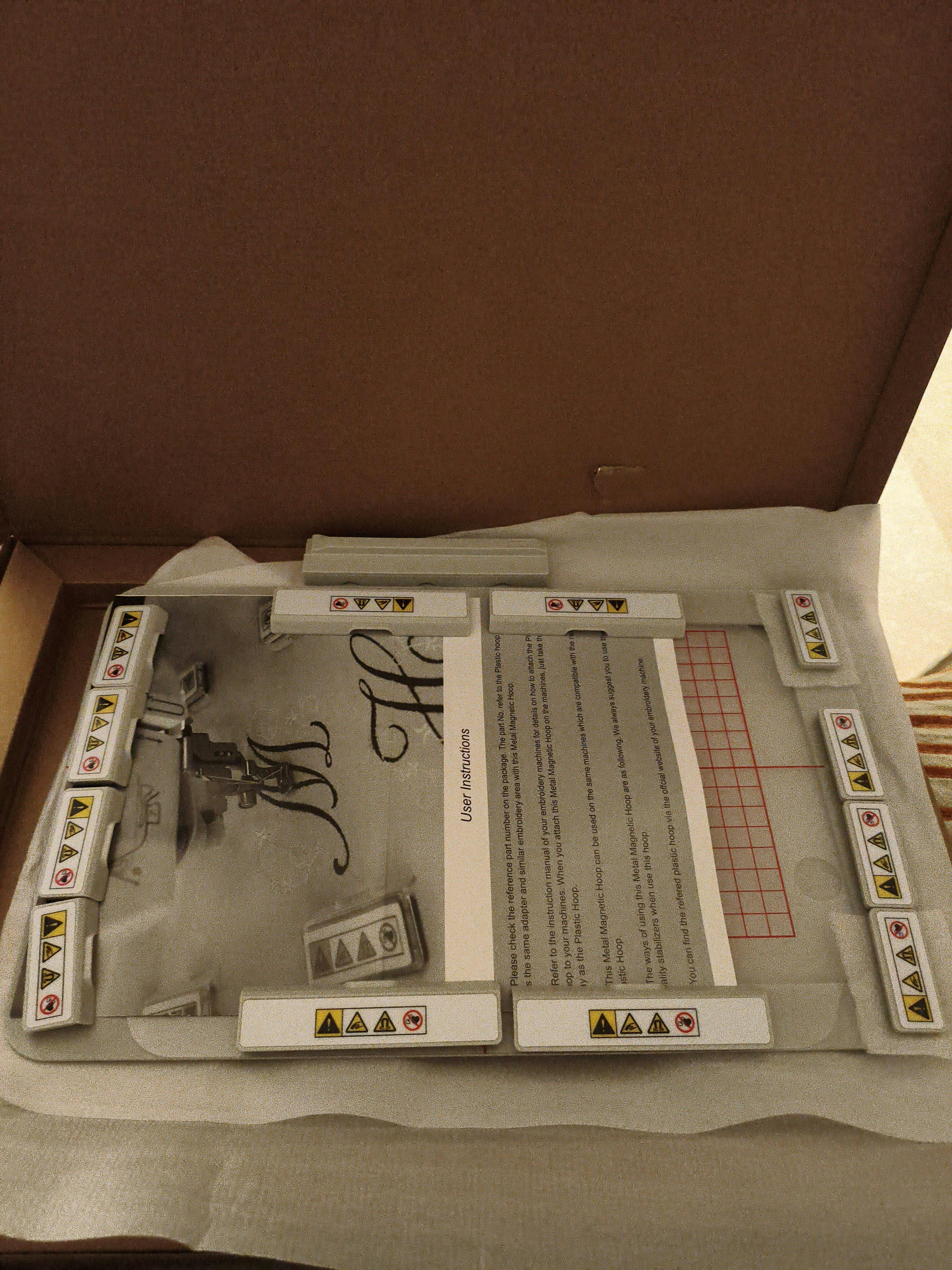
They were great@ They were able to get me on the right track. They were attentive and a great help! I am ready to start with my new hoops. I like the fact that they are somewhat freearm.
Cant wait to my pockets allows me to order more for our business