1. Introduction: The End of an Era for Brother's Flagship Machine
The Brother Dream Machine wasn’t just a combo—it was a breakthrough for home embroidery. It wowed creators with a 10.1" HD touchscreen, a built‑in camera, and the largest hoop size offered for home use at the time. For many enthusiasts, it was the Brother embroidery machine that could scan, design, and stitch with precision.
Then came the turning point: discontinuation. Why did this icon exit the stage? The reasons span rapid tech advances, updated product strategy, and newer, more connected successors. Whether you own one or you’re simply curious, this breakdown looks at what happened—and what comes next for passionate stitchers.
Table of Contents
- 1. Introduction: The End of an Era for Brother's Flagship Machine
- 2. Core Reasons for Discontinuation: Technology, Strategy, and Market Shifts
- 3. The Dream Machine in Brother's Innovation Timeline
- 4. Ownership Impact: Software, Maintenance, and Long-Term Support
- 5. Dream Machine vs. Successors: Key Upgrades and Feature Gaps
- 6. Buying Used? Assessing Value, Reliability, and Risks
- 7. Technical Legacy: How the Dream Machine Shaped Modern Embroidery
- 8. Conclusion: Embracing Innovation While Honoring a Milestone
- 9. FAQ: Brother Dream Machine Discontinuation
2. Core Reasons for Discontinuation: Technology, Strategy, and Market Shifts
2.1 Technological Obsolescence and Feature Limitations
At launch, the Dream Machine (XV8500D/XV8550D) felt futuristic. But innovation moved fast. The Dream Machine 2 brought InnovEye™ 2 for tighter alignment and real‑time corrections, while later models such as XJ2 and EV1 pushed further with refinements that left the original feeling dated. Built‑in design counts grew from 727 to 788 in 2024 models, with more fonts and in‑the‑hoop options. Connectivity became the real gap: newer machines gained Wi‑Fi, app features like My Design Snap, and cloud design libraries; the Dream Machine stayed with manual USB updates. As user videos and forums highlighted, the lack of wireless integration slowed modern workflows.
2.2 Strategic Product Replacement & Lifecycle Management
Brother streamlined its lineup to support the latest tech. Flagships like Luminaire XP3, XJ2, and Stellaire models stepped forward with projector alignment and wireless updates. The company has taken similar steps before—PE770 owners also saw parts become hard to source over time. And for shoppers seeking accessible features, alternatives such as the brother nq1700e present a modern path.
2.3 Market Pressures and User Experience Challenges
Premium complexity narrowed the audience. Some owners reported maintenance frustrations—internal components weren’t user‑serviceable, so minor jams often meant expensive trips to the shop. Competition intensified as Baby Lock Destiny and Janome Horizon 9850 offered comparable features, sometimes with simpler, app‑driven workflows. High upkeep costs and a shrinking target market ultimately sealed the Dream Machine’s fate.
3. The Dream Machine in Brother's Innovation Timeline
3.1 Flagship Launch and Pioneering Features (2014)
Launched in 2014 as the Innov‑is XV8500D, the Dream Machine arrived with nearly 30 patents and a spacious 56‑square‑inch workspace plus an 11.25‑inch needle arm. Its built‑in camera and scanner, paired with a 10.1" HD touchscreen and My Design Center, enabled scanning hand‑drawn art and stitching it out—no PC required. The 166 built‑in Disney/Pixar designs added licensed flair for home embroiderers.
3.2 Evolution to Successors: Luminaire and Beyond
Brother kept iterating. Luminaire XP3 expanded throat space, lighting, and—importantly—wireless updates and projector‑based alignment. In 2024, XE2 and XJ2 increased built‑in designs (e.g., 889 vs. 727 in XE1), added in‑the‑hoop patterns, and advanced couching options. Reviews and demos underscore the shift toward cloud‑assisted, app‑enabled workflows.
4. Ownership Impact: Software, Maintenance, and Long-Term Support
If you own a Dream Machine—or plan to buy one used—consider how discontinuation affects software, maintenance, and long‑term reliability.
4.1 Software Support Challenges and Upgrade Limits
When Brother ended Dream Machine production, the Brother SupportCenter app also bowed out, sending users back to the website for resources. Updates shifted to a manual USB workflow, while successors embraced Wi‑Fi, My Design Snap, and cloud transfers. With both the Dream Machine and Dream Machine 2 now discontinued, future updates are uncertain, raising the risk of eventual software obsolescence.
| Aspect | Impact |
|---|---|
| Software Support | Reliance on website resources; loss of app-based troubleshooting |
| Upgrades | Manual USB updates only; no wireless/cloud integration |
| Future Updates | Uncertain; risk of eventual software obsolescence |
4.2 Maintenance Hurdles and Parts Availability Risks
Closed chassis design made minor issues (like thread jams) service‑center problems, and costs add up. As with PE770, older computerized components may become scarce, complicating repairs. To reduce hooping hassles and fabric distortion, many owners turn to magnetic hoops for brother embroidery machines that clamp fabric evenly and quickly.
If you still hoop on a Dream Machine, a magnetic hoop for brother dream machine can streamline set‑up and improve alignment as official support wanes.
| Aspect | Impact |
|---|---|
| Maintenance | High dependency on professional servicing for minor repairs |
| Parts Availability | Risk of future scarcity; parallels with PE770 discontinuation |
| Hooping Solutions | Magnetic hoops (e.g., Sewtalent) ease fabric securing, alignment |
5. Dream Machine vs. Successors: Key Upgrades and Feature Gaps
5.1 Dream Machine 2 and Luminaire: Scanning, Space & Connectivity
The Dream Machine 2 (XV8550D) and Luminaire (XP2/XP3) elevated scanning accuracy, workspace, and on‑screen editing, while adding wireless workflows.
- InnovEye 2 tightened placement and enabled direct scanning of drawings and clip art.
- 11.25" needle‑to‑arm clearance and a 10.1" HD display improved visibility and control.
- Built‑in libraries expanded to 982+ designs, with more fonts and My Design Center tools.
- Wi‑Fi, apps, and projector alignment reduced juggling USB sticks and guesswork.
- Scanning got up to twice as fast in demos, saving time on every project.
| Feature | Dream Machine | Dream Machine 2 | Luminaire (XP2/XP3) |
|---|---|---|---|
| Scanning Tech | Basic InnovEye | InnovEye 2 (camera) | Projector + Camera + App |
| Embroidery Area | 9.5” x 14” | 9.5” x 14” | Larger hoops (exact size N/A) |
| Screen Size | Standard LCD | 10.1” HD (23% larger) | Comparable or larger |
| Design Editing | Basic tools | Advanced My Design Center | Photoshop-like tools |
| Connectivity | USB only | USB/SD card | Wi‑Fi + App integration |
5.2 Modern Alternatives: Balancing Features and Accessibility
If you prefer a lighter learning curve, newer 2024 models prioritize accessibility while still delivering robust results. Accessories matter, too: pairing a Luminaire with a brother magnetic hoop for luminaire can make garment embroidery faster and more consistent.
6. Buying Used? Assessing Value, Reliability, and Risks
Tempted by a used Dream Machine? Price drops of roughly 30–50% off original cost can be enticing, but compare against new models that are also trending down. If you’re browsing used embroidery machine for sale listings, weigh savings against support and part availability.
Parts for discontinued models become harder to source, and computerized components are finite. You’ll also forgo modern conveniences such as wireless updates and app‑based transfers.
| Factor | Considerations |
|---|---|
| Cost Savings | 30–50% below original price, but compare to new model pricing |
| Feature Trade-offs | Lacks wireless/app integration, modern design tools |
| Support Ecosystem | Limited updates, shrinking parts availability |
| Resale Potential | Faster depreciation than newer, widely supported units |
Recommendation: Buy from an authorized dealer with warranty and verified service history. For most creators, a newer model often delivers better long‑term value.
7. Technical Legacy: How the Dream Machine Shaped Modern Embroidery
7.1 Pioneering Innovations: Large Hoops, Scanning, and Disney Designs
The Dream Machine introduced a then‑largest 9.5" x 14" hoop for home use, enabling bigger layouts in a single hooping. Its camera/InnovEye 2 system, My Design Center, Snowman positioning marker, and the ScanImation Scanning Frame (with Dream Machine 2) reshaped how users digitize and align designs. Understanding brother embroidery hoops sizes became part of planning expansive projects.
7.2 Influence on Today's Machines: From Alignment Tech to Workflows
Its DNA is everywhere: generous embroidery fields, real‑time previews, touchscreen editing, and simplified digitizing are now baseline expectations. Modern machines trade some heft for portability, wireless connectivity, and streamlined interfaces—without abandoning the precision the Dream Machine helped standardize.
8. Conclusion: Embracing Innovation While Honoring a Milestone
The Dream Machine’s retirement reflects rapid progress, strategic lineup updates, and the realities of maintaining complex hardware. Its legacy lives on in today’s user‑friendly, connected models. Whether you keep stitching on a trusted classic or move to Luminaire or Stellaire, you’re part of a community that embraces both innovation and the enduring magic of embroidery.
9. FAQ: Brother Dream Machine Discontinuation
9.1 Q: Can I still get parts or software updates for the Dream Machine?
A: Parts may become scarce over time. Software updates are manual via USB—there’s no wireless or app‑based support for this model.
9.2 Q: What officially replaced the Dream Machine?
A: The Luminaire XP3 and Stellaire models (XJ1/XE1) stepped in with features like projector‑based alignment and wireless connectivity.
9.3 Q: Is buying a used Dream Machine advisable?
A: Only if purchased from an authorized dealer with warranty and verified service history. Weigh risks of limited parts and missing modern features.
9.4 Q: Why was the Dream Machine 2 discontinued as well?
A: For the same reasons as the original: advancing technology, newer models, and a strategic shift in Brother’s product roadmap.
Muy contenta con mis nuevos bastidores. Además, me gustaría hacer una mención especial a la atención al cliente, tuve algunos problemas con el envío y Olivia fue muy atenta y me ayudó durante el proceso.
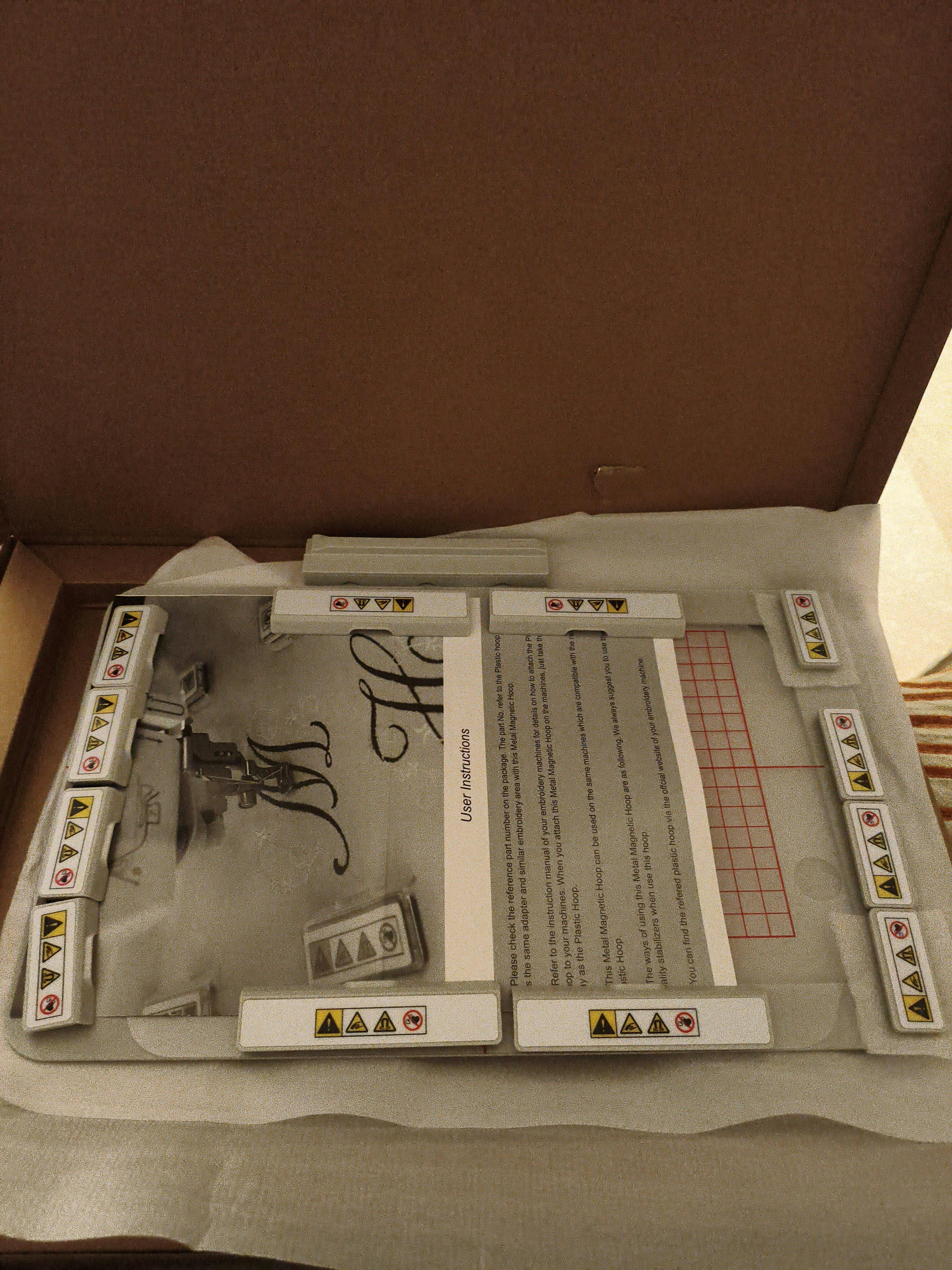
They were great@ They were able to get me on the right track. They were attentive and a great help! I am ready to start with my new hoops. I like the fact that they are somewhat freearm.
Cant wait to my pockets allows me to order more for our business