1. Introduction: The Foundation of Professional Stitching
Stitch quality is the quiet hallmark of every garment and textile, shaping how pieces look, feel, and last. From a busy embroidery studio to a first handmade shirt, the line between polished work and disappointment often comes down to stitch details. Consistent length, balanced tension, and precise seam allowance build durability and refinement. In the pages ahead, we unpack these core parameters and show how mastering them elevates everyday projects into professional-grade results.
Table of Contents
- 1. Introduction: The Foundation of Professional Stitching
- 2. Core Parameters for Evaluating Stitch Quality
- 3. Visual Indicators of High vs. Low-Quality Stitching
- 4. Techniques for Achieving Professional Stitches
- 5. Material Impact on Stitch Performance
- 6. Troubleshooting Common Stitch Defects
- 7. Stitch Maintenance and Repair Protocols
- 8. Conclusion: Integrating Quality Stitch Principles
- 9. FAQ: Quality Stitch Essentials
2. Core Parameters for Evaluating Stitch Quality
Great stitch quality isn’t just for factories—it’s a practical skill for anyone who sews or embroiders. Focus on three pillars to quickly separate robust, professional seams from those that fail early: stitch length consistency, tension balance, and seam allowance precision.
2.1 Stitch Length Consistency and SPI Measurement
Consistent stitch length is foundational. In industry practice, stitch length is measured as stitches per inch (SPI). For machine embroidery and quality garments, 8–12 SPI is a widely accepted sweet spot—dense enough for strength but not so tight that it creates stiffness or puckering. Stretch fabrics may need a slightly tighter stitch; very heavy materials can benefit from a looser setting.
How to measure SPI: use a ruler or seam gauge and count the number of stitches within one inch of seam. Aim for consistency—1–3 SPI variation is generally acceptable, but sudden jumps (like 8 to 16 SPI in one seam) signal poor workmanship and uneven stress distribution.
| Parameter | Best Practices |
|---|---|
| SPI Range | 8–12 SPI for quality garments; tighter for stretch |
| Consistency | 1–3 SPI variation max; abrupt changes = poor work |
Consequences of inconsistency: Low SPI (4–6) can weaken seams; excessive density can stiffen fabric and reduce comfort. Always calibrate SPI to fabric type and intended use.
Pro tip: Cross-reference SPI with fabric and function. Leggings demand durable seams that survive stretch; a silk blouse benefits from a finer, more delicate stitch.
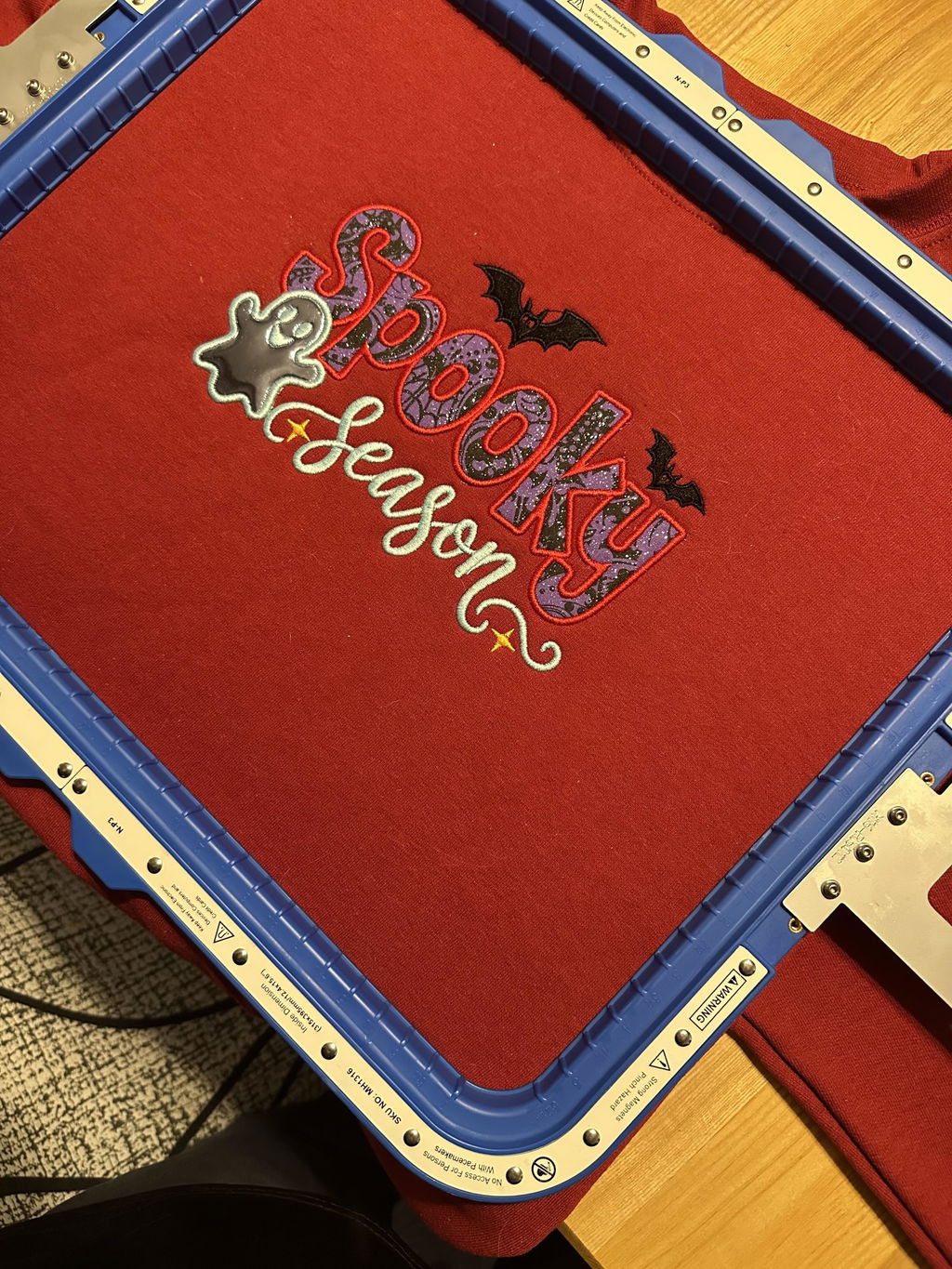
For machine embroidery designs, consistent SPI also pairs with well-fitted embroidery machine hoops to keep fabric stable while you stitch.
2.2 Mastering Tension: Avoiding Puckering and Looping
Balanced tension keeps seams smooth and flat with no bunching, loops, or separation when gently stretched. When tension drifts, the symptoms show immediately: puckered seams, visible loops, or threads that appear when the fabric is pulled apart.
Visual indicators of correct tension:
| Indicator | Good Quality | Poor Quality |
|---|---|---|
| Tension Check | Even threads, flat seams | Bunching, loose loops, visible threads |
| Testing | Seam resists thread visibility | Threads show or separate under stress |
Test by gently pulling the fabric away from the seam—hidden threads and a holding seam mean the balance is right. Adjust machine tension for fabric weight and type: heavy denim calls for stronger tension; slippery satin needs a lighter touch to prevent puckers.
Common pitfalls: - Puckering or ruching: tension too tight, especially on delicate or slippery fabrics. - Loose, visible threads: tension too loose, risking unraveling.
A seam that looks clean but pops when stretched is classic tension imbalance—always test by hand.
When embroidering, a magnetic embroidery hoop can help maintain even fabric tension across the design area.
2.3 Seam Allowance Precision and Alignment
Seam allowance—the distance from fabric edge to stitch line—directly affects strength and fit. Keep spacing uniform; wavy or uneven lines cause bunching or poor fit. Use a light test: hold the seam to a light source; minimal gaps suggest dense, secure stitching. Reinforce high-stress points (crotch seams, armholes) with extra stitching or bartacks. Professional garments feature straight, consistent allowances, clean edges, and seam intersections that meet precisely.
3. Visual Indicators of High vs. Low-Quality Stitching
You don’t need a magnifying glass to spot quality. Look for pattern matching, clean hems, refined buttonholes, secure threads, and the absence of defects.
3.1 Pattern Matching and Hem Construction
Pattern matching shows cutting accuracy and tension control. In high-quality garments, stripes, plaids, and prints align at seams and shoulders so the design flows without interruption.
- High-quality: patterns align cleanly across seams and at shoulders.
- Low-quality: misalignment at key seams signals rushed cutting or uneven tension.
Hem construction also reveals workmanship. Professional hems are uniformly folded, pressed, and stitched with consistent spacing—no bulk, puckering, or twisted “roping.” Proper embroidery frame setup during embroidery helps preserve alignment and finish.
- Professional hem: smooth, flat, even; no excess bulk.
- Poor hem: uneven folds, loose stitches, bulk, or roping.
3.2 Buttonholes, Thread Security, and Absence of Defects
Quality buttonholes are cleanly reinforced and even, with secure bartacking at ends. Thread security matters too—no loose tails at seams or hems.
- High-quality: clean edges, secure bartacks, no fraying.
- Low-quality: rough edges, loose threads, incomplete bartacks.
Simple stress tests help: - Stretch seams gently to check for separation or slippage. - Inspect hems and buttonholes for secure stitching and fray resistance.
Technical tests (used in industry contexts) reinforce what your eyes see: - Seam slippage testing: strong seams resist slippage. - Tensile strength testing: seams hold under force. - Fatigue testing: seams endure repeated bending without degrading.
| Marker | High-Quality Stitching | Low-Quality Stitching |
|---|---|---|
| Pattern Alignment | Seamless across seams | Visible misalignment |
| Buttonhole Finish | Reinforced, clean, secure | Rough, loose, incomplete |
| Hem Construction | Uniform, pressed, no bulk | Uneven, loose, excessive bulk |
| Stitch Density | Even, appropriate SPI | Irregular, skipped, too loose |
| Thread Security | Trimmed, reinforced, no loose ends | Loose threads, unraveling |
Ready to level up your evaluations? A mix of visual checks and light stress testing reliably separates professional work from subpar construction.
4. Techniques for Achieving Professional Stitches
Professional results come from refined technique, the right tools, and patience. Whether hemming, reinforcing seams, or embroidering a centerpiece, these methods raise your finish from homemade to high-end.
4.1 Blind Hemming and Specialty Stitches
Blind hems create nearly invisible edges on skirts, pants, and jackets.
Hand blind hemming: 1. Preparation: double-fold the raw edge (typically 1/4" then 1/2") and press for a sharp crease. 2. Thread choice: match thread color to the fabric. 3. Stitching: take tiny horizontal bites from the garment fabric, then return to the fold every ~1/2".
Machine blind hemming: 1. Tools: a blind hem foot helps guide fabric for precision. 2. Stitch pattern: use the machine’s blind hem stitch (straight stitches with periodic zigzags that just catch the fold). 3. Setup: fold the hem outward so the zigzag barely catches the fold without showing on the right side.
Pro tips: - Use a pressing cloth to avoid shine on the right side. - Test stitch width on scraps—too wide and stitches show; too narrow and the hem won’t hold. - Deep hems and thick fabrics benefit from blind hems to reduce bulk.
Specialty stitches for durability and flexibility: - Backstitch: hand-sewn strength for reinforcements. - Zigzag: ideal for stretch and finishing raw edges. - Overcasting: use an overedge foot for clean exposed seams. - Slip and catch stitches: go-to hand stitches for invisible hems, linings, and labels.
4.2 Tension Adjustment and Fabric Stabilization
Tension is the muscle of a seam—too tight and fabric puckers; too loose and stitches sag or unravel. Read the seam: flat and even signals balance; loops or puckers call for recalibration. Always test adjustments on fabric scraps. Incrementally tune upper and lower tension, and keep tension discs and the bobbin area free of lint.
In embroidery, consistent fabric tension is critical. This is where modern hooping systems, like magnetic embroidery hoops, shine. Unlike screw-based hoops, magnetic systems automatically adapt to changing fabric thickness, keeping tension uniform and distortion low.
Why choose Sewtalent magnetic hoops for garment embroidery? - Effortless stabilization: holds delicate silks to thick sweatshirts securely, minimizing slippage and misalignment. - Uniform tension: textured contact distributes pressure evenly to prevent hoop burn and fabric damage. - Time-saving efficiency: hooping takes roughly 30 seconds instead of about 3 minutes per piece. - Durability: built with high-grade PPSU engineering plastic and N50-grade magnets to outlast standard hoops.
If you’re done wrestling with screw-tightened hoops and distortion, upgrading can transform your workflow—saving time, reducing waste, and delivering consistency. Among magnetic hoops for embroidery machines, even pressure across the design area helps stop puckering before it starts.
4.3 Needle/Thread Selection and Basting
Needle and thread pairings make or break results.
Needle selection: - Denim/heavy fabrics: heavy-duty needles (90/14 or larger) + strong polyester thread. - Silk/delicates: fine needles (60/8–70/10) + cotton or silk thread to prevent snags. - Stretch/knits: ballpoint needles; polyester-wrapped threads for flexibility.
Thread guidelines: - Polyester: high tensile strength for stress points. - Cotton: softer hand and reduced puckering on natural fibers. - Six-stranded cotton (embroidery): use 2–3 strands for most hand work.
Basting: Long, temporary stitches secure layers for fitting and alignment before permanent seams—ideal for zippers, collars, and multi-layer assemblies. Remove easily after final stitching.
5. Material Impact on Stitch Performance
Technique alone isn’t enough—fabric structure and thread choice strongly influence seam strength, resilience, and appearance.
5.1 Fabric Weave and Thread Compatibility
Woven fabrics (e.g., poplin, gabardine) distribute stress efficiently and often produce stronger seams; knits (e.g., weft knits) stretch and can lose seam strength if the wrong stitch or thread is used. Pair plain weaves like poplin with polyester-wrapped threads for crisp strength; match twill weaves like denim with 100% polyester thread for maximum tensile performance.
Stitch class and seam type also matter: Class 602 (lockstitch) typically delivers the highest seam strength at a given SPI, while superimposed seams suit knits for stretch and resilience. Bound and flat seams reduce puckering but can trade off some strength in stretchy materials.
5.2 Embroidery Floss Quality and Durability
Floss quality affects separation, threading, knotting, fraying, and color consistency. Premium six-stranded cotton floss separates cleanly, threads easily, resists tangling, and maintains colorfastness across batches better than generic options. For detailed, durable hand embroidery, 2–3 strands of high-quality floss are a reliable choice; pearl cotton and silk add texture and sheen but may limit very fine detail.
Store floss cool and dry, and label colors for continuity across projects. Proper magnetic embroidery frames stabilization during embroidery keeps tension consistent and prevents fabric distortion.
6. Troubleshooting Common Stitch Defects
Even experts face skipped stitches, tension swings, and puckering. Most issues have clear, stepwise fixes if you know where to look.
6.1 Skipped Stitches and Tension Inconsistencies
Skipped stitches—common causes and fixes: - Dull or bent needle: replace with the correct size and type. - Incorrect threading: rethread upper and lower paths properly. - Tension imbalance: adjust incrementally, testing on scraps. - Lint buildup: clean tension discs, bobbin area, and hook race.
Fabric-specific guidance: - Heavy fabrics (denim, canvas): heavy-duty needles (90/14 or larger) with polyester thread. - Delicates (silk, fine cotton): fine needles (60/8–70/10) with cotton thread.
Tension inconsistencies: - Upper thread too loose: tighten upper tension; clear lint from discs. - Lower thread too tight: loosen bobbin tension; check bobbin placement. - Thread quality: choose low-lint, consistent threads.
Preventive maintenance: replace needles every 8–10 hours of use; remove lint routinely; always match thread and needle to fabric.
6.2 Puckering Solutions and Fabric Handling
Puckering stems from tension imbalance, fabric drag, or poor stabilization.
Solutions: - Tension balancing: loosen upper or tighten lower tension until seams lie flat. - Walking or Teflon foot: promotes smooth feeding on slippery or layered fabrics. - Bobbin placement: ensure correct seating to avoid take-up issues.
Handling tips: - Knits: use stretch needles and polyester thread. - Wovens: maintain consistent tension and choose evenweave where possible.
The power of hooping techniques: Stabilization is critical in embroidery. Magnetic frames for embroidery machine distribute pressure evenly across thick or multi-layered fabrics, helping prevent distortion and puckers while speeding setup.
7. Stitch Maintenance and Repair Protocols
Professional results last when you maintain both machine and garments. Routine care prevents many defects and keeps seams performing reliably.
7.1 Cleaning and Storage Best Practices
Thread and machine maintenance: - Remove lint regularly, especially around the bobbin area and tension discs. - Replace dull or bent needles promptly. - Rethread completely if you notice loose seams or skipped stitches.
Preventive measures: - Slow down over bulky joins to reduce breakage and preserve seam integrity. - Store garments in cool, dry spaces; avoid closet overcrowding.
Long-term preservation: - Use padded hangers for delicate pieces; fold heavy garments to avoid shoulder stretch. - Lubricate moving machine parts per the manual.
7.2 Repairing Degraded Stitches and Seams
DIY repair strategies:
| Issue | DIY Solution | Limitations |
|---|---|---|
| Loose or uneven stitches | Adjust thread tension; rethread machine | Requires basic machine knowledge |
| Broken needles | Replace with correct type and secure insertion | Complex timing issues need a professional |
| Minor thread degradation | Reinforce with matching hand stitches | Not ideal for structural damage |
Handy techniques: - Reinforce weak areas with small, tight stitches. - Patch from the inside with compatible fabric, then secure around edges. - Tweak tension gently—avoid overcorrection.
When to call a pro: complex timing problems, motor faults, or deep structural issues warrant professional service to restore function without risking further damage.
DIY vs. professional repairs:
| Factor | DIY | Professional |
|---|---|---|
| Cost | Low (thread, needles) | Higher (labor, equipment) |
| Time | Minutes to hours | Hours to days |
| Suitability | Routine, minor fixes | Complex, deep repairs |
| Durability | Temporary or moderate | Long-lasting, structural |
8. Conclusion: Integrating Quality Stitch Principles
Quality stitching turns garments from ordinary to outstanding. By mastering SPI, tension, and seam precision; applying professional techniques; and maintaining your tools and textiles, you’ll produce consistent, durable, and refined results. Trusted embroidery machine brands make excellence repeatable—keep these principles at the center of your process.
9. FAQ: Quality Stitch Essentials
9.1 Q: How many SPI (stitches per inch) should I use for denim?
A: An 8–12 SPI range generally balances strength with flexibility for denim. Test on scraps to dial in the best setting for your specific fabric and seam.
9.2 Q: Can puckering be fixed after stitching?
A: Minor puckers may improve with tension correction and steam pressing. Severe puckers usually require removing stitches and resewing with balanced tension and proper stabilization.
9.3 Q: Why does thread fray during embroidery?
A: Common causes include poor thread quality, mismatched needle size, and excess friction from rough fabrics. Use quality floss, match needle and thread to the material, and check for burrs that add wear.