1. Introduction
Blank crewneck sweatshirts are the go-to canvas for branding, merch drops, team uniforms, and everyday wear. This guide covers sourcing at scale, picking the right fabrics and fits, proven decoration workflows, and eco-forward choices—so you can turn a simple blank into a standout piece. If embroidery is on your roadmap, a magnetic embroidery hoop can streamline setup on thick fleece.
Table of Contents
- 1. Introduction
- 2. Top Wholesale Sources for Bulk Blank Crewnecks
- 3. Best Styles and Brands for Customization
- 4. Material Quality and Durability Analysis
- 5. Customization Techniques: From DTF to Embroidery
- 6. Care and Maintenance Essentials
- 7. Sustainable Material Options for Eco-Conscious Buyers
- 8. Conclusion
- 9. FAQ
2. Top Wholesale Sources for Bulk Blank Crewnecks
Choosing the right wholesale partner impacts cost, timelines, and final quality. Think beyond price: weigh reliability, product variety, shipping speed, and how well blanks handle decoration.
2.1 Leading Suppliers and Their Key Features
- Blankstyle: Broad catalog from basics to premium, reliable durability and comfort for events and teams.
- ShirtMax: Aggressive pricing (below $7), volume discounts, free shipping over $99, with brands like Gildan and Bella+Canvas.
- Wordans: Competitive wholesale pricing across major brands and colorways for fast matching.
- ShirtSpace: No minimums; same-day shipping on pre-noon orders—great for testing.
- Original Favorites: GOTS-certified organic cotton in midweight and heavyweight for sustainability-driven lines.
- Bella + Canvas: Versatile blanks with a modern hand, suitable for print and embroidery.
- JonesTshirts: Tiered pricing on Gildan, rewarding volume purchases.
At a glance:
| Supplier | Price Range (Per Unit) | Volume Discounts | Shipping Policy |
|---|---|---|---|
| ShirtMax | Below $7 | Yes | Free shipping over $99 |
| JonesTshirts | Tiered pricing | Yes | Not specified |
| Original Favorites | $63–$75 (discounted) | Not mentioned | Not specified |
| ShirtSpace | Varies by brand | Yes | Same-day shipping (pre-noon orders) |
Key takeaways:
- No Minimums: ShirtSpace is ideal for pilots and micro-runs.
- Bulk Incentives: ShirtMax and JonesTshirts offer tiered discounts at scale.
- Product Variety: Organic cotton from Original Favorites; versatile unisex fits via ShirtSpace and Bella+Canvas.
2.2 Budget vs Premium Sourcing Strategies
- For Budget Buyers: ShirtMax and JonesTshirts help maximize margins with low per-unit cost and tiered pricing.
- For Premium/Eco Brands: Original Favorites leads with GOTS-certified organic cotton, aligning with sustainability goals.
- Order Planning: Hit free-shipping thresholds and bulk pricing breaks to reduce unit cost.
- Flexibility: ShirtSpace supports rapid sampling and small-batch launches.
What to prioritize during supplier vetting:
- Materials: GOTS-certified organic cotton and water-based pigment dye processes.
- Performance Blends: Moisture-wicking fabrics with 4-way stretch.
- Fabric Weight: Request swatches; 280–400 gsm often fits mid-to-heavy applications.
3. Best Styles and Brands for Customization
The right blank balances fabric, weight, and construction with your chosen decoration method.
3.1 Fabric and Weight Compatibility by Decoration Method
| Brand | Model | Fabric | Weight | Key Features | Best For |
|---|---|---|---|---|---|
| Gildan | 18000 Heavy Blend™ | 50% Cotton, 50% Poly | Heavyweight | Industry-standard, midweight fleece, durable | Screen printing, bulk orders |
| Port & Company | PC850 Fan Favorite | 60% Cotton, 40% Poly | Midweight | Soft, breathable, relaxed fit | Heat transfers, casual designs |
| Port & Company | PC098 Beach Wash® | 100% Cotton | Lightweight | Garment-dyed, vintage look | Embroidery, retro-inspired |
| Independent | SS3000 Midweight | 80% Cotton, 20% Poly | Midweight | Fitted silhouette, side seams, snug collar | DTG printing, fashion-forward |
| Comfort Colors | 1566 Ring Spun | 100% Cotton | Lightweight | Soft, premium comfort, vibrant prints | Screen printing, high-end apparel |
| Next Level | 9001 Santa Cruz Pocket | 60% Cotton, 40% Poly | Lightweight | Pocket detail, modern unisex design, soft fabric | Embroidery, streetwear |
| Method | Recommended Styles |
|---|---|
| Screen Printing | Gildan 18000, Comfort Colors 1566, Port & Company PC850 |
| Embroidery | Next Level 9001, Port & Company PC098 |
| DTG/Heat Transfers | Independent SS3000, Next Level 9001 |
GSM Impact: Heavier weights like Gildan 18000 stabilize screen prints. Lightweight styles such as Next Level 9001 favor embroidery and heat transfers due to less bulk.
3.2 Brand Showdown: Gildan vs Champion vs Bella+Canvas
- Gildan: The budget workhorse; 18000 Heavy Blend™ is consistent and print-friendly.
- Champion: Athletic heritage with durable heavyweight options and reverse weave; boxier fits with brand appeal.
- Bella+Canvas: Soft, modern silhouettes and retail-ready color stories.
- Hanes: Dependable comfort and durability for everyday wear.
| Brand | Key Strengths | Fit | Printability | Price Point | Sizing Notes |
|---|---|---|---|---|---|
| Gildan | Affordability, variety | Boxy/standard | Excellent | Low | True to size, short |
| Champion | Durability, brand value | Boxy/athletic | Excellent | Mid to high | May run large |
| Bella+Canvas | Softness, modern fit | Fashion-forward | Excellent | Mid | True to size |
| Hanes | Durability, comfort | Standard | Good | Low to mid | True to size |
For tricky fleece areas and snug collars, a magnetic hoop can help maintain placement during embroidery setup.
4. Material Quality and Durability Analysis
Fabric composition, weight, and yarn type drive comfort, print/embroidery results, and lifespan.
4.1 Fabric Composition and Performance Metrics
Cotton vs. Cotton-Poly Blends
- 100% Cotton: Breathable and soft. Ring-spun (e.g., SpectraUSA’s 3100PFD, 30 singles combed) is exceptionally soft and dye-friendly; open-end (e.g., Los Angeles Apparel 1801GD, 18/1) feels relaxed and resists shrinkage.
- Cotton-Polyester Blends: Add resilience; blends like Gildan’s 50/50 resist pilling/shrinkage and dry faster.
- Supima® Cotton: Original Favorites uses this for a luxury hand.
Weight, GSM, and Yarn Count
- Weight: Heavier fabrics (≈240 GSM+) are tougher; lightweight (~4.5 oz or ~122 GSM) prioritizes drape.
- Yarn Count: Higher singles (30) = finer, softer, more pill-resistant; lower counts (18/1) are chunkier.
| Brand/Product | Weight (oz/yd²) | Weight (GSM) | Yarn Count | Key Features |
|---|---|---|---|---|
| Los Angeles Apparel 1801 | 6.5 | 220 | 18 singles | Garment-dyed, shrink-resistant |
| SpectraUSA 3100PFD | 4.5 | ~122 | 30 singles | PFD (Prepared for Dye), tubular |
| Ricoma Unisex Tee | 5.0–5.5 | 170–180 | N/A | Designed for DTF/DTG printing |
| Heavy Cotton Jersey (Scribd Example) | N/A | 240 | N/A | Heavy cotton jersey, rib-trimmed |
Durability Factors
- Double-Stitched Seams: Reinforce high-stress zones (e.g., Original Favorites).
- Dyeing: Garment dyeing (e.g., LA Apparel 1801GD) yields rich, stable color; PFD (e.g., SpectraUSA 3100PFD) accepts custom dye evenly and curbs post-dye shrinkage.
Shrinkage and Longevity
- 100% Cotton: Typically 0–3% even when pre-shrunk.
- Cotton-Poly Blends: Minimal shrinkage and better shape retention.
Pro Tip: For vibrant DTG/DTF, the Ricoma 5.0–5.5 oz tee is tuned for print; for bulk screen printing stability, LA Apparel’s 6.5 oz fabric is reliable.
Sustainability and Ethics
- Los Angeles Apparel emphasizes ethical manufacturing while delivering retail-ready blanks.
4.2 Longevity Factors: From Stitching to Dyeing Processes
- Stitching: Double-stitching at shoulders and cuffs boosts lifespan.
- Dyeing: Garment-dyed pieces keep color depth and fit consistency; PFD blanks are primed for custom palettes with reduced shrink risk.
- Care: Cold water, gentle cycles, and low-heat or air drying protect both fabric and decoration.
5. Customization Techniques: From DTF to Embroidery
Modern decoration opens new creative lanes:
- DTG now achieves photographic quality on 50/50 cotton-poly blends.
- Embroidery with 3D puff foam adds striking dimension.
- Screen printing innovations include thermochromic inks and glow-in-the-dark formulas.
5.1 Screen Printing vs DTF: Cost and Detail Comparison
Screen Printing
- Best For: Bulk runs, simple logos, bold graphics.
- Pros: Vibrant, durable, cost-effective at scale; works on cotton, poly, and blends.
- Cons: Higher setup for small orders; limited gradients; potential fading on darks.
DTF (Direct-to-Film)
- Best For: Small batches, photoreal images, fine lines, gradients.
- Pros: Excellent detail; broad fabric compatibility; on-demand friendly.
- Cons: Slightly raised hand; higher material costs; more steps.
Recommended pairings:
- Screen Printing: Gildan 18000, Comfort Colors 1566, Port & Company PC850.
- DTF: Next Level 9001 and similar light, smooth surfaces.
| Factor | Screen Printing | DTF |
|---|---|---|
| Best For | Bulk, simple designs | Small batches, complex art |
| Cost | Low (bulk), high (small) | Moderate |
| Design Detail | Limited | Excellent |
| Fabric Compatibility | Wide range | Most fabrics |
| Durability | High | Moderate |
| Turnaround Time | Fast (bulk) | Moderate |
5.2 Professional Embroidery on Crewnecks
Stabilizer Use
- Why it matters: Fleece can stretch or distort under the needle; stabilizer keeps stitching crisp.
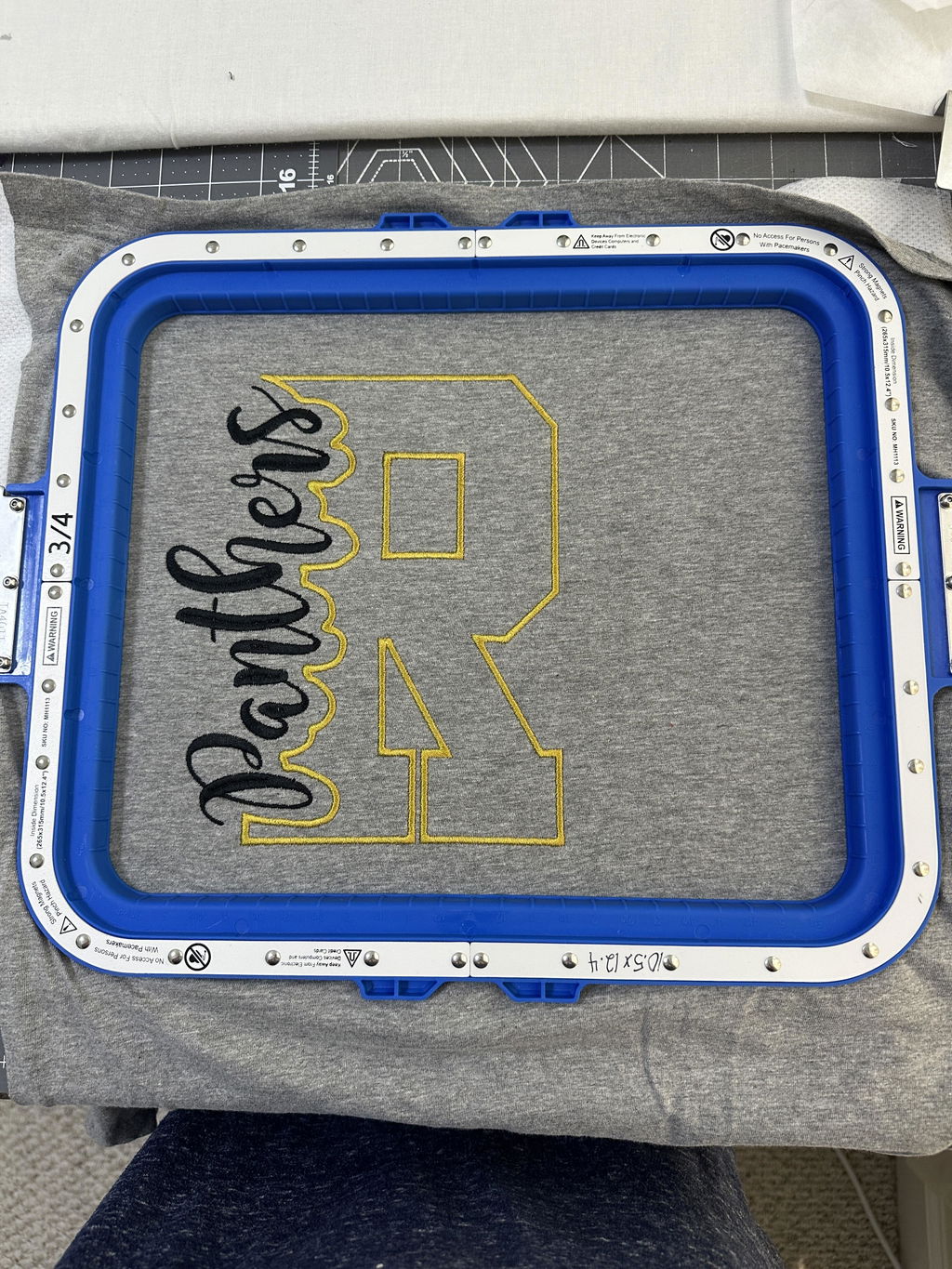
For consistent hooping on thicker fleece, many decorators use magnetic hoops for embroidery machines to maintain even hold without crushing the pile.
Thread Selection and Density
- Thread: Choose high-quality, colorfast threads (poly is strong with a clean sheen).
- Density: Match stitch density to fabric weight to avoid puckering or sparse coverage.
Achieving Even Tension: The Sewtalent Advantage
Sewtalent magnetic hoops deliver even tension and reduce distortion on sweatshirt fabrics. The magnetic system adapts to varying thicknesses, holds firmly without marks, keeps alignment true with a broad, textured contact area, and speeds production while reducing operator fatigue.
5.3 Hybrid Workflows for Unique Designs
The Power of Hybrid Decoration
- Combine print (screen or DTF) with embroidery to add depth and texture.
Keeping It Aligned
Magnetic systems maintain fabric integrity across multi-step workflows, preventing misalignment between print and stitch elements. For precise alignment during complex passes, many shops rely on magnetic embroidery frames.
Pro Workflow Tip
To lock fabric in place through layered techniques, magnetic hoops for embroidery help avoid shifting so every layer lands where you planned.
6. Care and Maintenance Essentials
6.1 Washing Protocols to Minimize Shrinkage
Material Composition and Shrinkage
- 100% Organic Cotton: Expect 0–3% natural shrinkage even when pre-shrunk.
- 50/50 Cotton-Poly (e.g., Gildan, Hanes): Minimal shrinkage thanks to polyester.
- Pre-Shrunk Blends (e.g., Sport-Tek): Reduced shrinkage, though slight change is possible.
Washing Instructions
- Wash cold on gentle.
- Turn inside out to protect prints and embroidery.
- Avoid chlorine bleach.
Drying Methods
- Air dry to maintain shape.
- Low-heat tumble is acceptable for blends; avoid high heat on 100% cotton.
| Factor | 100% Cotton | 50/50 Cotton-Poly | Pre-Shrunk Blends |
|---|---|---|---|
| Shrinkage Risk | High (0–3%) | Low | Minimal |
| Durability | Prone to pilling | Pill-resistant | Colorfast |
| Care Recommendations | Hand wash preferred | Machine wash cold | Machine wash cold |
6.2 Preserving Customized Details Long-Term
- Inside-out washing minimizes abrasion.
- Air drying protects fibers and finishes.
- Treat stains promptly with cold water; avoid heat setting.
- Fold or hang to prevent collar stretch and seam stress.
If production used embroidery magnetic hoops, even tension during hooping also helps designs resist distortion over time.
7. Sustainable Material Options for Eco-Conscious Buyers
7.1 Organic Cotton vs Recycled Blends: Environmental Impact
Organic Cotton
- Production: Grown without synthetic pesticides, fertilizers, or GMOs.
- Certifications: GOTS and OCS validate organic content and processes.
- Pros: Softness, breathability, durability, and premium brand perception.
- Cons: Higher cost; still water-intensive versus recycled inputs.
Recycled Cotton
- Production: Post-industrial/consumer textiles mechanically re-spun.
- Certifications: GRS and RCS verify recycled content and responsible processing.
- Pros: Diverts waste, lowers carbon and water impact, supports circular stories.
- Cons: Shorter fibers can reduce softness/strength unless blended.
Comparative view:
| Aspect | Organic Cotton | Recycled Cotton |
|---|---|---|
| Source | Virgin, non-GMO cotton | Post-industrial/consumer waste |
| Fiber Quality | Longer, stronger | Shorter (may reduce durability) |
| Environmental Impact | Fewer chemicals, soil health | Resource conservation, waste diversion |
| Certifications | GOTS, OCS | GRS, RCS |
| Cost | Higher | Often lower |
Blends that combine organic and recycled content can balance softness, strength, and impact—dual certification supports transparency.
Environmental impact metrics:
| Metric | Organic Cotton | Recycled Cotton |
|---|---|---|
| Water Usage | Reduced via soil health | Conserved via reuse |
| Carbon Emissions | Lower than conventional | Lower than virgin |
| Waste Reduction | Limited | Significant |
Recommendations
- Premium Sustainability: Choose 100% organic cotton for softness and longevity.
- Circular Focus: Recycled blends lower resource use and amplify waste diversion.
- Certification First: Partner with GOTS/GRS-aligned suppliers.
7.2 Leading Eco-Friendly Brands and Certifications
- Original Favorites: GOTS-certified organic cotton crewnecks in midweight and heavyweight for quality-first eco lines.
- Port & Company: Garment-dyed options that deliver a soft, vintage hand and support eco-conscious processes.
Beyond fabric: Circular manufacturing models now let customers return worn crewnecks for fiber recycling into new garments. Suppliers increasingly offer carbon-neutral shipping and plant-based packaging derived from mushroom mycelium or seaweed.
8. Conclusion
Blank crewnecks are a durable canvas for branding and creativity. Source smart with reliable wholesalers, align fabric/weight to decoration, and use proven workflows—screen printing, DTF, and embroidery—to get consistent results. With the right care, your pieces will last, and with sustainable options, they can tread lighter on the planet.
9. FAQ
9.1 Q: Are crewneck sweatshirts unisex?
A: Yes, most blank crewneck sweatshirts use a unisex fit. Some brands offer specialized fits, but the majority flatter a wide range of body types.
9.2 Q: How can I prevent shrinkage in my crewneck sweatshirt?
A: Wash cold on gentle and air dry when possible. Cotton-rich styles shrink more, so consider sizing up for a looser fit.
9.3 Q: What’s the best decoration method for beginners?
A: Screen printing and DTF are user-friendly on cotton/poly blends. Embroidery adds a premium touch but needs more specialized setup.
9.4 Q: How do sizing differences between brands affect my order?
A: Gildan is boxy and true to size, Champion can feel roomier/athletic, and Bella+Canvas leans fashion-forward. Always check brand size charts.
9.5 Q: Do cotton/poly blends retain color better than 100% cotton?
A: Yes. Blends are generally more colorfast and resist fading and pilling better than pure cotton.